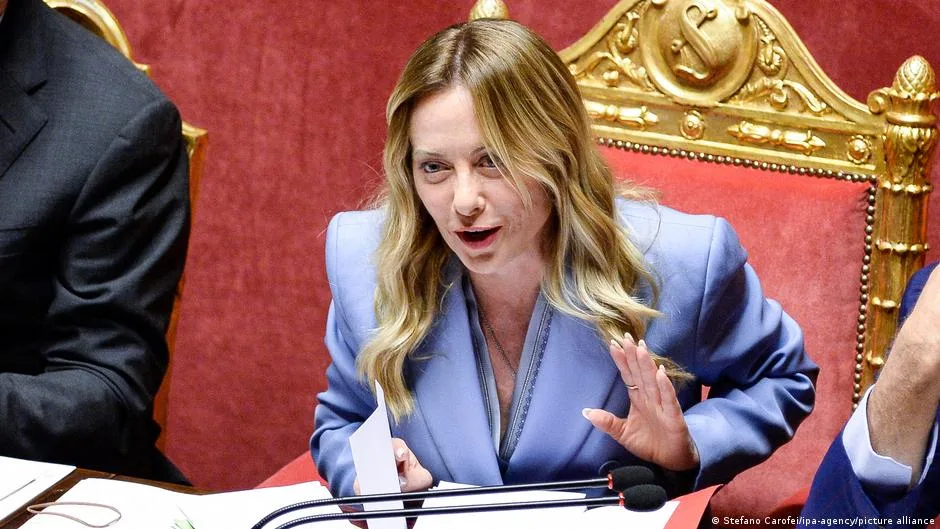
Georgia Meloni's government, the Prime Minister of Italy, has banned wearing burqas and veils in the schools of this country by passing new regulations. This decision is part of a larger package of educational policies aimed at facilitating the integration of foreign students into the Italian educational system.
New restrictions for foreign students
Giuseppe Valditara, the Minister of Education of Italy, announced that these regulations particularly focus on students who have recently arrived in Italy. Children born in Italy or who have previously attended an Italian kindergarten are exempt from these restrictions.
Read more: Israeli ambassador's attempt to provoke Iran's representative at a meeting
Currently, there are about 34,000 classes in Italy where more than 30 percent of the students are of foreign descent. However, most of these classes will not be affected by the new regulations. Parents of children who face serious difficulties in adapting and integrating are required to participate in free Italian language courses. Non-compliance in this regard may result in a fine of up to one thousand euros.
History and legal implications
A 30 percent limit for foreign students in each class has existed in Italy since 2010. In the past, this law has been flexible, allowing for an increase or decrease in this percentage based on the students' proficiency in the Italian language. These changes are socially and politically significant in Italy, especially considering that since 1975, wearing clothing that makes identification difficult has been prohibited.
Despite these laws, Italy's highest administrative court allowed complete face covering for religious or cultural reasons in 2008, provided that the individual shows their face for identification if necessary. These legal contradictions could impact educational and social environments.
Political and electoral challenges
The parliamentary elections in Italy will be held in 2027, and issues such as immigration and the integration of migrants are among the most important electoral matters in the country. Meanwhile, Meloni is facing a new rival from the far-right called "National Future" (Futuro Nazionale), led by Roberto Vannacci. This party, established in February 2026, is not part of the government coalition and has gained significant support in polls.
The National Future party called for a stricter crackdown on wearing burqas in schools this July, and now Meloni's government has included one of the party's demands in its new regulations. The approval of these regulations has been done as a "legal decree," allowing the Italian government to act without parliamentary approval, although the parliament is obliged to convert it into law within 60 days.
The use of legal decrees as a tool for managing emergencies in Italy has been criticized by some experts. This method, especially in various political contexts, could have significant implications for the democratic process and legal decision-making in Italy.
Read more: Qatar rejects Netanyahu's accusations at the United Nations · Tehran urban management ready to host students in the new school year