The presence of Iranian universities in the Shanghai subject rankings from 2024 to 2026 tells a story of fluctuations and changes in scientific fields. The results of this ranking, which examines the performance of universities in various disciplines, indicate significant changes in the number and type of Iranian universities' presence.
Chart of Universities' Presence Changes
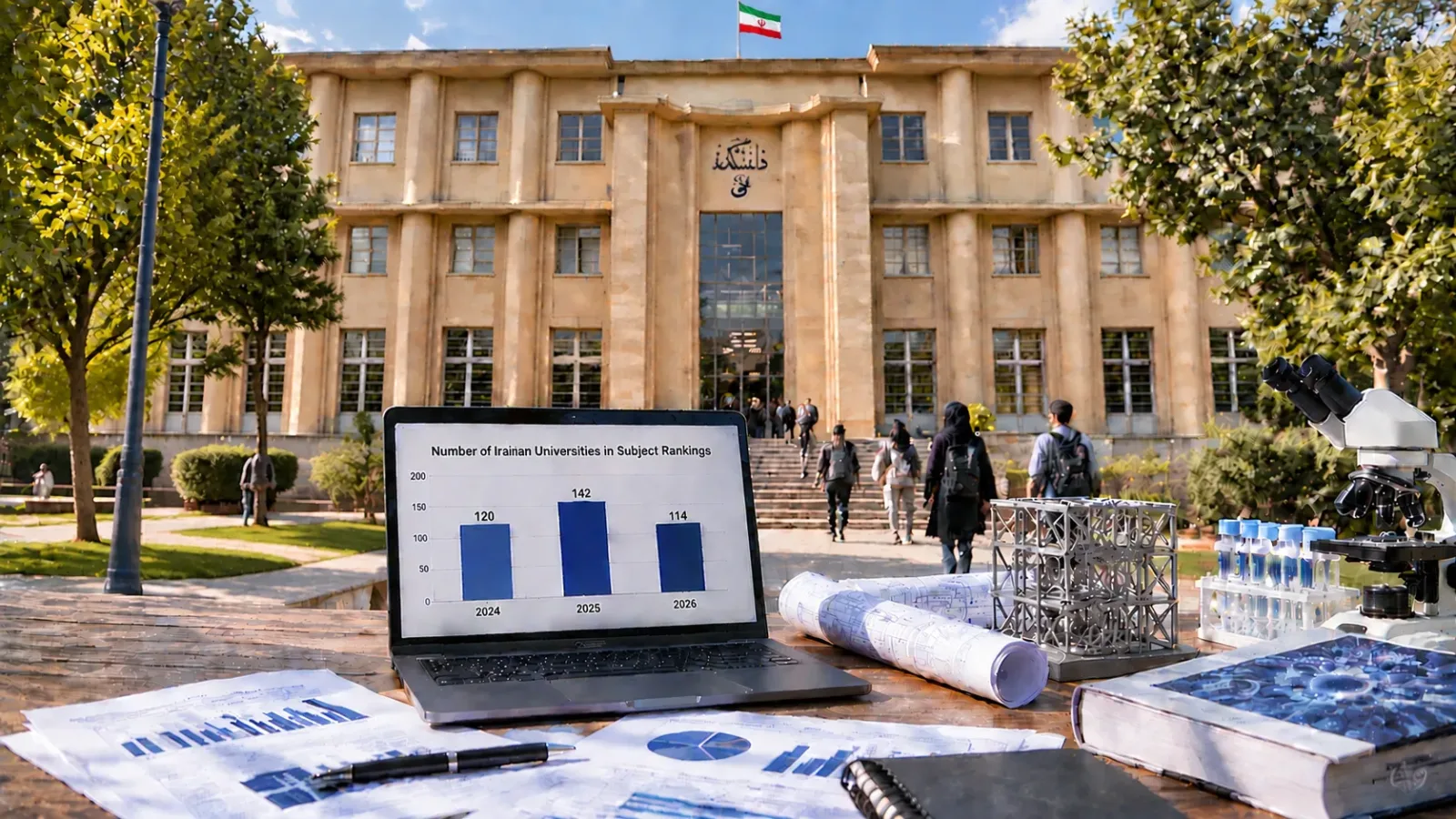
In 2024, 29 Iranian universities were registered with 120 instances of presence in this ranking. Of this number, 71 instances were related to engineering and 24 instances to medical sciences. This composition shows that nearly four-fifths of Iran's presence is concentrated in the two fields of engineering and medical sciences.
Read more: The President Talks About the Realities of Iran at the UN General Assembly
In 2025, the number of presences increased to 142, with 35 universities participating in 57 different subjects. However, this increase alone does not signify a scientific leap, and attention must also be paid to the quality of universities' performance.
Return to 114 Instances in 2026
In 2026, the number of Iran's presences decreased to 114, which is 28 instances less than in 2025. Nevertheless, the disciplinary composition did not change much, with engineering and medical sciences still constituting a major part of Iran's presences. In that year, 70 instances were related to engineering and 24 to medical sciences.
The decrease in the number of presences does not in itself indicate a scientific decline. The Shanghai ranking pays attention to several indicators of research quality, impact, and scientific collaborations. Therefore, to understand these fluctuations more accurately, one must look at the breakdown of subjects and universities.
Uneven Distribution of Presences
A more detailed analysis shows that the presence of Iranian universities in the ranking is not only uneven in terms of quantity but also in terms of subject distribution. For example, Iran University of Science and Technology is ranked between 201 and 300 in the subject of mathematics, and other universities also participate in various fields. This difference in performance indicates that one cannot simply judge the efficiency of a university.
Ultimately, the conducted investigations show that despite numerical fluctuations, the main composition and major sections of the scientific presence of Iranian universities have remained stable. This situation is particularly notable in the fields of engineering and medicine and requires more attention to the quality and impact of research.
Read more: Mohammad Baqer Qalibaf: We Will Neither Shut Down the Country Nor Surrender · The Occultation of the Moon and Venus in the Sky of Iran