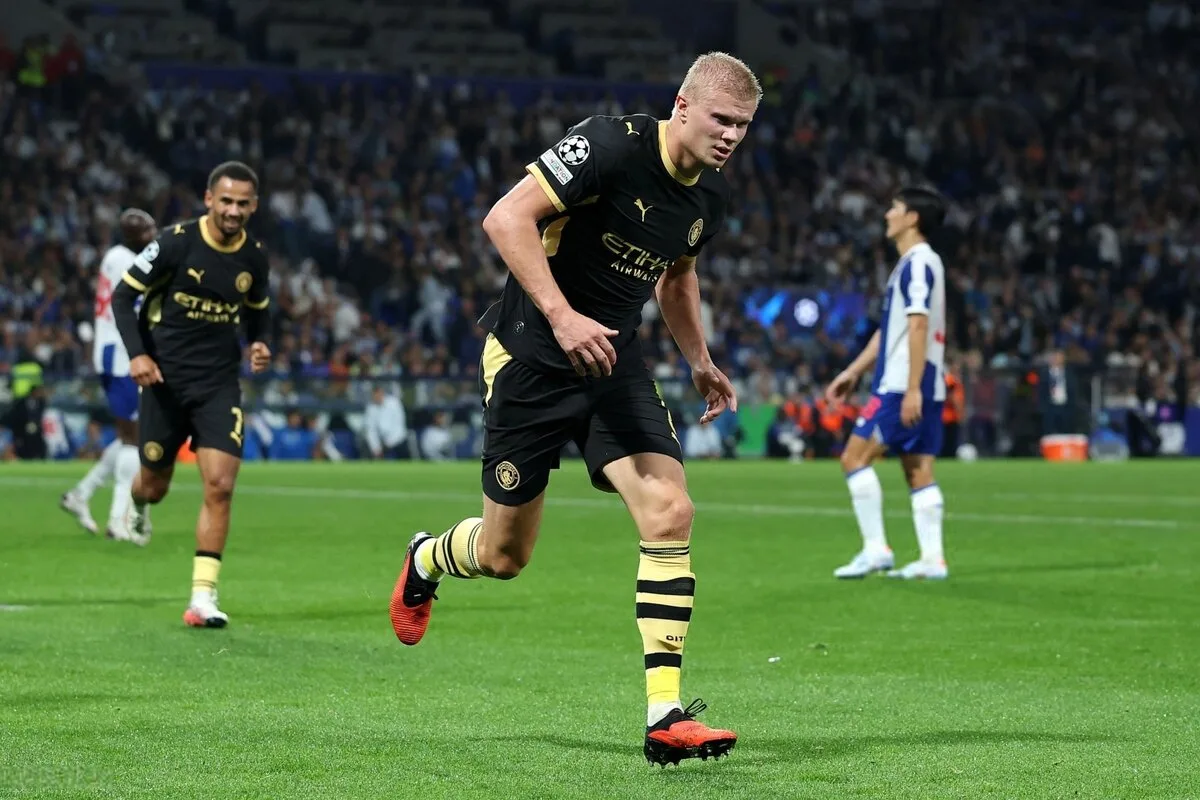
Erling Haaland, the 26-year-old striker of the Norwegian national team and Manchester City, requested a substitution due to feeling a muscle injury during his country's match against Portugal. This incident occurred while the game was tied 1-1 in the 67th minute, and Haaland left the pitch due to limping. His exit has caused deep concerns at Manchester City.
Details of Haaland's Injury
Haaland, who scored 5 goals in the first 5 matches of this Premier League season, left the field while the Norwegian national team was seeking victory in their crucial match. He was replaced by Jørgen Strand Larsen, a striker from Crystal Palace, and just 10 minutes after his departure, Gonçalo Ramos scored Portugal's second goal.
Read more: Haj Safi: Mr. Javad is my pride and I haven't been called up for two years
Haaland's injury and his physical condition, especially with the Premier League resuming soon, have raised significant concerns for Manchester City's head coach, Pep Guardiola. The team is set to face Liverpool on Sunday, and Haaland's absence could greatly impact the outcome of this match.
Further Concerns for Manchester City
In addition to Haaland, another Manchester City player, Nico O'Reilly, was also sidelined from the England national team camp due to a physical issue and returned to his club. This highlights the physical challenges players are facing at this critical juncture.
Manchester City is competing this season in the Premier League with the aim of winning the title, and the absence of key stars like Haaland could disrupt the team's plans. Pep Guardiola is hopeful that Haaland can quickly return to match fitness and play in upcoming matches for his team.
Ultimately, this injury is concerning not only for Haaland, who is in peak form, but also for the fans and the Manchester City club. It is hoped that with the necessary medical evaluations, Haaland's condition will be clarified soon, and he can return to the field.
Read more: Ali Alipour on the verge of missing against Naft Abadan · Asgharkhani: Youth football conflicts are the result of coaches' and families' behavior