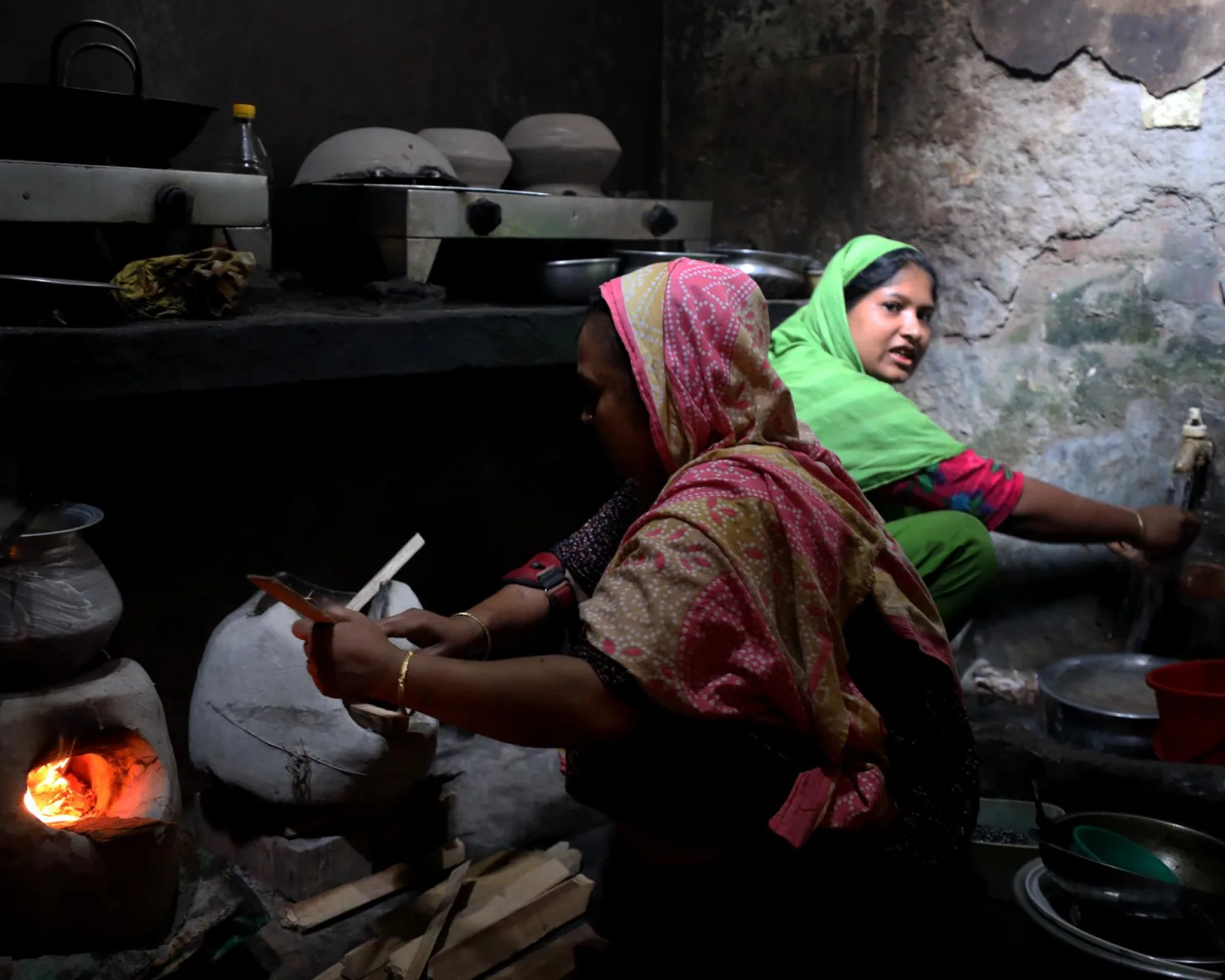
Halder, a 34-year-old bank employee in Bangladesh, wakes up at 1 AM to cook for his family. The energy crisis that has plunged Bangladesh's capital, Dhaka, with a population of nearly 40 million, into darkness has made this the only time when the supply of piped gas is sufficient for proper cooking.
Now life in Dhaka does not continue as normal, and people are struggling to carry on in conditions where public areas also shut down before noon.
Read more: Kim Yo Jong: North Korea continues to strengthen its nuclear capabilities
Challenges Facing the Bangladeshi Government Amid the Energy Crisis
This crisis is a result of the U.S. war with Iran and Bangladesh's dependence on energy imports. The government, which was elected just weeks before the war began, is facing many challenges. Halder says, "I don’t want anything extraordinary from the government; I just want to turn on the stove and find gas, I want to turn on the light and have electricity, I want to get clean water from the tap. These are not luxuries."
The government of the Bangladesh Nationalist Party (BNP) was elected last February, following protests in 2024 that led to the overthrow of the Awami League government, which had been in power for 15 years. After a period of a caretaker government, the BNP took on the responsibility of creating a new path for the country, but just weeks later, the war in Iran began, and the closure of the Strait of Hormuz disrupted gas shipments from the Middle East.
In response to this crisis, the government has allocated energy and ordered that shops, markets, and shopping centers close by 8 PM. Bright billboards must be turned off by 7 PM, with only hospitals, pharmacies, and emergency services exempt from this rule.
Impact of the Energy Crisis on Daily Life
The situation in rural Bangladesh is worse, where in August, people were without electricity for up to 16 hours a day. According to government data, the national load shedding reached over 3,000 megawatts at its worst. However, changes in Dhaka, a city that is usually in constant motion, are more noticeable. Long streets in areas like Mohammadpur, Kawran Bazar, and Dhanmondi are now frighteningly dark.
This crisis has forced local residents to constantly make calculations, such as when the gas will be strong enough for cooking, how many hours the fan can be turned on in the humid summer, and how long the line at the gas station will be.
The result of this situation is that nearly 3 million more people will face food insecurity in the final months of this year, an 18% increase from the summer figure of 15.3 million.
Ahmed, 50, who only provided his last name, owns an electrical workshop in central Mohammadpur but lives in Keraniganj, a suburb of Dhaka. He says, "When I close the shop, I can hardly find a vehicle, and the cost has gone up. I’m afraid to be alone in the dark streets."
According to him, "Sometimes I think I should leave the country and go somewhere else, but I am 50 years old and have no money to go. So I think about it and feel there is nowhere to go."
Currently, the daily demand for gas in Bangladesh is about 107 to 113 million cubic meters, while the existing supply is around 74 million cubic meters. Bangladesh produces little energy internally and relies on Middle Eastern gas, which accounts for nearly half of Bangladesh's energy supply. The U.S. war with Iran has severely impacted Bangladesh's liquefied natural gas (LNG) imports, with imports decreasing by 83% between July and August.
The situation worsened on July 21, when a fire rendered one of Bangladesh's two floating LNG terminals inoperable, adding to existing disruptions. These problems have forced factories to use expensive generators, reducing or even shutting down production, leading to increased production and transportation costs.
Khandakar Ghulam Moazzemi, research director at the Dhaka Policy Dialogue Center, says, "This disruption has added to the long-standing weaknesses of Bangladesh's energy system, stemming from mismanagement of public services. This crisis has not only harmed households but has also impacted energy-intensive sectors of the economy such as textiles, ceramics, glass, steel, transportation, agriculture, fisheries, and general business activities."
Read more: Kim Yo Jong: North Korea will use all tools against threats to its interests · Date and Palm Festival in Karun begins with one million palms