The discovery of an inscribed stone in the village of Behbeit el-Hagar in the Gharbia Governorate of Egypt resulted in a remarkable archaeological achievement. This stone was found by a local resident while working on his land and was reported to local authorities. This action led to the initiation of rescue excavations, the results of which far exceeded expectations.
Amazing Findings in the Excavations
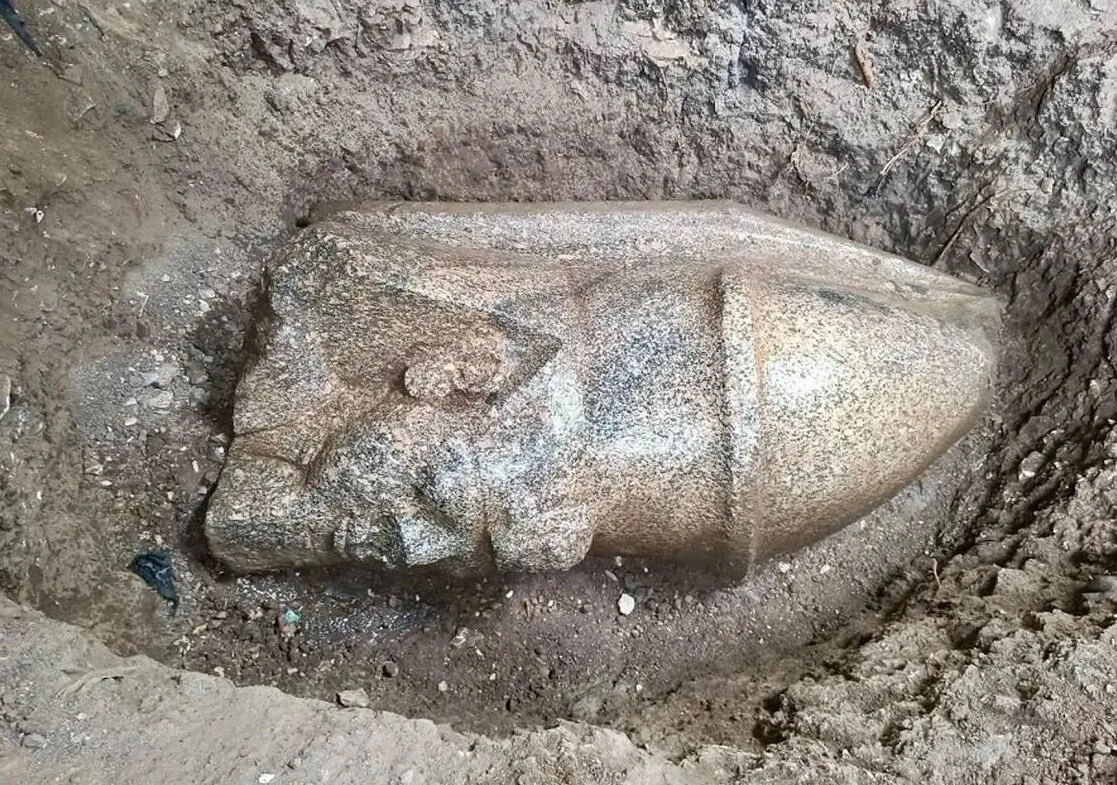
According to reports, an archaeological team from the Supreme Council of Antiquities of Egypt discovered the remains of two massive royal statues and a piece of pink granite containing hieroglyphic inscriptions related to Ramses II during these excavations. The most important finding is the head of a statue measuring 1.6 meters tall of Ramses II, which wears the double crown of Egypt. This crown symbolizes his rule over Upper and Lower Egypt.
Read more: Ahmad Irandoost works as a bodyguard for Mohammad Reza Golzar
Archaeologists also found part of the back column of the statue, which bears the name of the king Horus, "Horus Ka Nekht Meri Ma'at." This inscription links the statue's identity to Ramses II, one of the greatest pharaohs in the history of Egypt. Ramses II ruled from 1279 to 1213 BC.
Other Statues and the History of the Area
Near this site, archaeologists also discovered a significant portion of another royal statue, with the remains measuring 2.4 meters in length. Although the legs and base of the statue have been destroyed, its face remains recognizable, and its traditional striped headband is clearly visible. The strong resemblance of this statue to the first raises the possibility of its belonging to Ramses II, but its identity has not yet been definitively confirmed.
Another finding is a piece of pink granite approximately 1.3 meters long, which contains two royal titles of Ramses II. This discovery indicates that there were once significant monumental structures in this part of the Nile Delta. However, it is still unclear whether the statues were originally erected in this location or were moved to this area at a later time.
The ancient site of Behbeit el-Hagar is recognized for the remains of a massive temple of Isis, one of the most important goddesses of ancient Egypt. This temple has become one of the religious centers in the Nile Delta, and the discovery of new statues adds to the historical significance of this area.
Read more: The Afghan Tablighi Jamaat: Roots, Challenges, and an Uncertain Future · Naftali Bennett declared Qatar an enemy and changed the management of Gaza