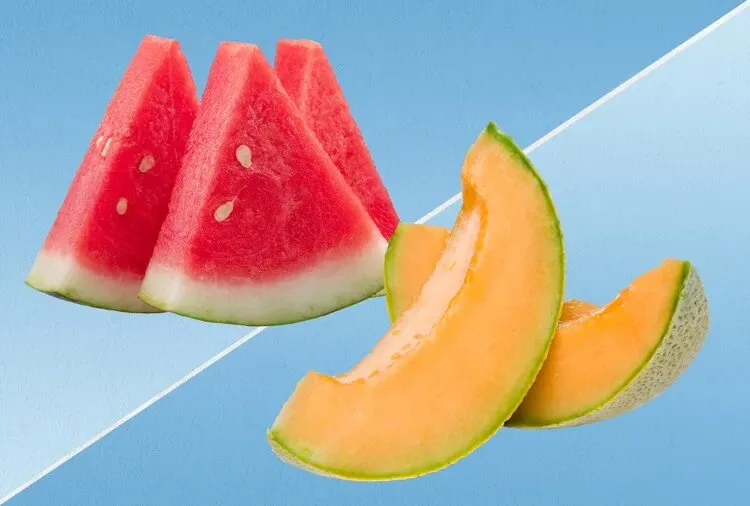
Cantaloupe and watermelon are among the most popular fruits for quenching thirst and enjoying sweet flavors. These two fruits, with their natural sugars, are always of interest to those concerned about their blood sugar levels. But should we really avoid eating them?
Water and Sugar Composition in Fruits
Watermelon, with about 91% water, is known as a low-calorie snack. A cup of diced watermelon contains about 11 grams of carbohydrates, and although its glycemic index is relatively high, its glycemic load in a typical serving is low. This means that eating a cup of watermelon does not necessarily lead to a sharp increase in blood sugar.
Read more: Eating with friends regulates blood sugar
On the other hand, cantaloupe, with about 93% water, has similar characteristics. A cup of diced cantaloupe contains approximately 12 grams of carbohydrates and 1.5 grams of fiber. The fiber in cantaloupe can help slow down the digestion and absorption of carbohydrates, resulting in a more gradual increase in blood sugar.
Antioxidants and Vitamins
Watermelon is known for its high lycopene content, an antioxidant that gives it its red color. Studies have shown that lycopene may be associated with metabolic health and blood sugar regulation. In contrast, cantaloupe is a rich source of vitamin C, which can help improve glucose metabolism.
Nutrition experts believe that the difference between watermelon and cantaloupe is not significant enough for most people to label one as "good" and the other as "bad." In fact, the portion size and its combination with other foods are more important.
Instead of eliminating fruits, managing the type and amount of their consumption can be a better solution. Consuming watermelon or cantaloupe alone and on an empty stomach is not recommended; rather, combining them with protein, healthy fats, or fiber can slow down carbohydrate absorption.
Ultimately, while cantaloupe has a slight edge in fiber and vitamin C, watermelon is also a good source of water and lycopene. Therefore, both can easily be included in the diet and enjoyed for their benefits.
Read more: Black tea and reduced risk of vascular diseases: A new study from the Academy of Medical Sciences of China · Mohammad Mahdi Nasiri: Insurance coverage for the elderly will increase