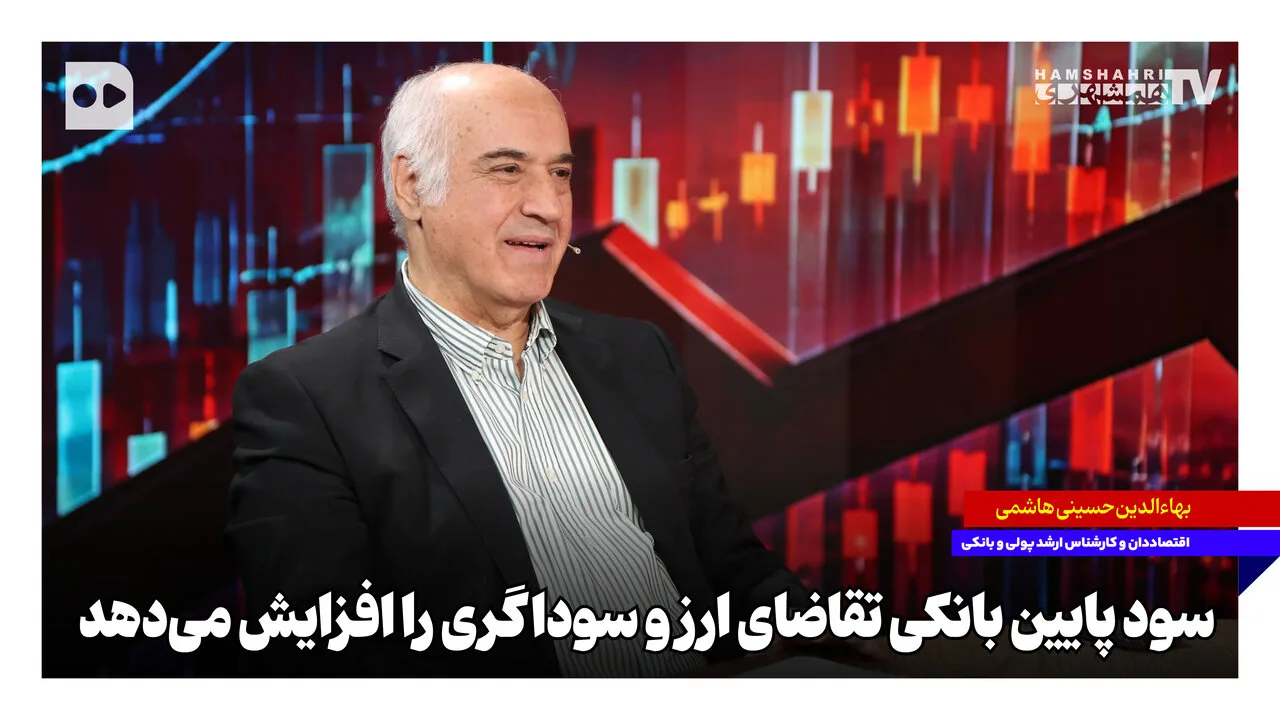
Bahaddin Hosseini Hashemi, an economist and senior monetary and banking expert, has analyzed the effects of low interest rates and high inflation on the currency and loan markets in his new assessment of the country's economic situation.
Increase in Artificial Demand
Hosseini Hashemi believes that low interest rates alongside high inflation indirectly increase artificial demand for loans and currency. He emphasizes that this situation is particularly attractive for individuals looking to preserve the value of their money. These individuals, considering their decreasing purchasing power, turn to parallel markets and currency, which can lead to increased volatility in the currency market.
Read more: Tehran Stock Exchange Ends with a Drop of 103,955 Units
Capital Flight and Economic Consequences
This economist warns that the increase in artificial demand for currency and loans can not only lead to currency fluctuations but also create conditions for capital flight. He believes that with decreasing interest rates, investors seek safer places for investment, which can lead to reduced domestic investment and increased capital outflow from the country.
Hosseini Hashemi further points out the necessity of adopting appropriate economic measures, stating: "To prevent economic crises, it is essential that the country's monetary and fiscal policies are designed in a way that maintains balance in financial markets and prevents capital flight."
This analysis is in line with the need for a comprehensive approach to managing the country's economy and preventing the negative consequences of low interest rates and high inflation, and it seems that paying attention to these points can significantly help improve the country's economic situation.
Read more: Mirzaei: The Entry of the 2026 Toyota Will Marginalize the Peugeot 206 · Decrease in Dollar Price and Uncertainty in Iran-US Negotiations