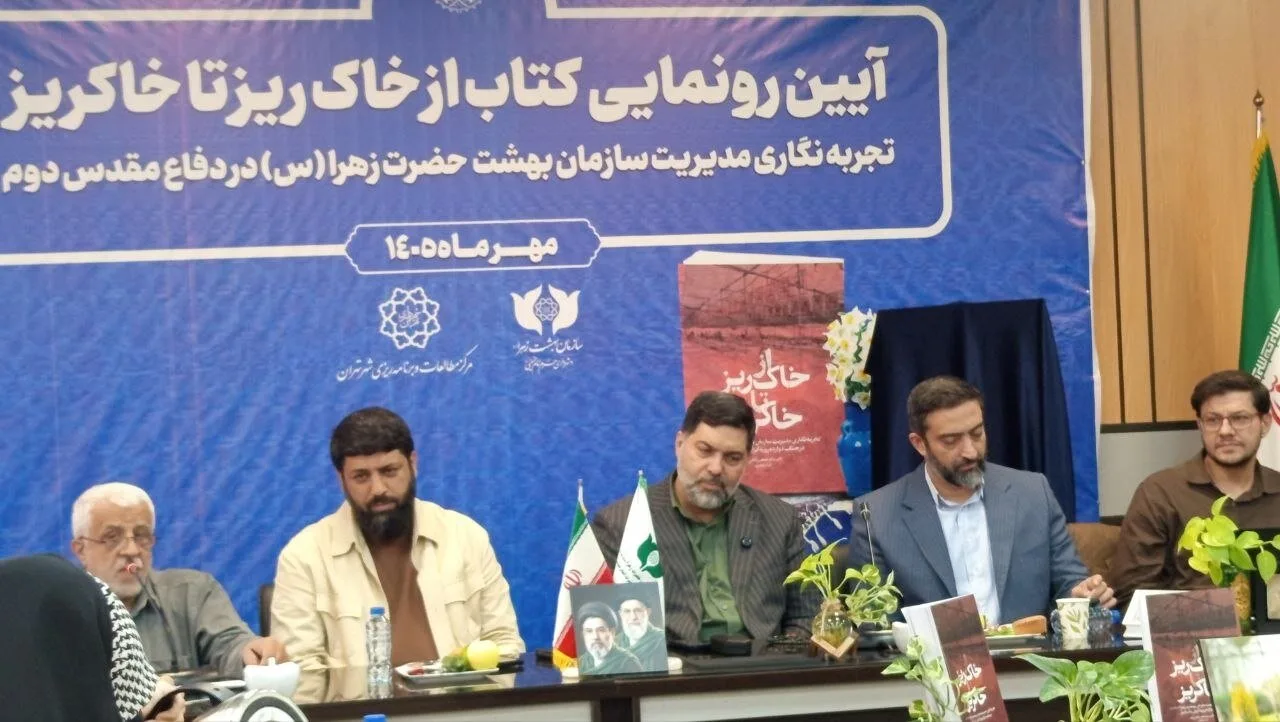
Alireza Nadali, spokesperson and vice president of the Cultural and Social Commission of the Islamic Council of Tehran, this morning at the unveiling ceremony of the book "From Trench to Trench," which focuses on documenting the management experiences of the Behesht Zahra (S) organization during the second Sacred Defense, highlighted the importance of recording and transferring the management experiences of this organization, referencing his own memories from the Sacred Defense and recent wars.
Sweet and Bitter Memories of War
Nadali shared memories from the Sacred Defense, stating: "During the 12-day war, we witnessed a significant event in this organization. Behesht Zahra (S) operated like an island disconnected from any other institution, while in the Ramadan War, previous experiences were utilized, resulting in better performance."
Read more: Rubio and the Importance of Khayyam, Khwarizmi, and Avicenna in the History of Science
He clarified: "In the 12-day war, unlike the Ramadan war, there was no prior background, but the jihadist experience and years of listening to the elders, military commanders, and families of martyrs proved valuable. The Basij youth brought all their connections to the field and linked various organizational sectors to better serve the families of martyrs."
Challenges Faced by Martyrs' Families and the Necessity of Documenting Experiences
Nadali also pointed out the differences between the families of martyrs in the second and third Sacred Defenses, stating: "Some of these families were unfamiliar with the previous model, and it is natural that in addition to the concern of losing their loved ones, they faced challenges such as identification, forensic medicine, and matters related to the ascension of the martyrs."
He commended the Tehran Municipality Studies Center, saying: "One of the important features of this work is extracting the real propositions and main messages of the events, which have been carried out based on operational feedback and for transferring experiences to future implementations."
Nadali added: "Many of these propositions can be transformed into artistic products. If the stories of this work are documented, turned into novels, or transformed into dramatic visual and auditory works, it will undoubtedly result in a more powerful, realistic, and impactful outcome."
In conclusion, a member of the Islamic Council of Tehran wished success to all those involved in this project, stating: "This type of work can serve as a model for managing future crises."
Read more: Majid Majidi: The Iranian Nation Will Never Surrender · The Rings Gifted by Ayatollah Seyyed Mojtaba Khamenei to the Families of Martyrs in Lebanon