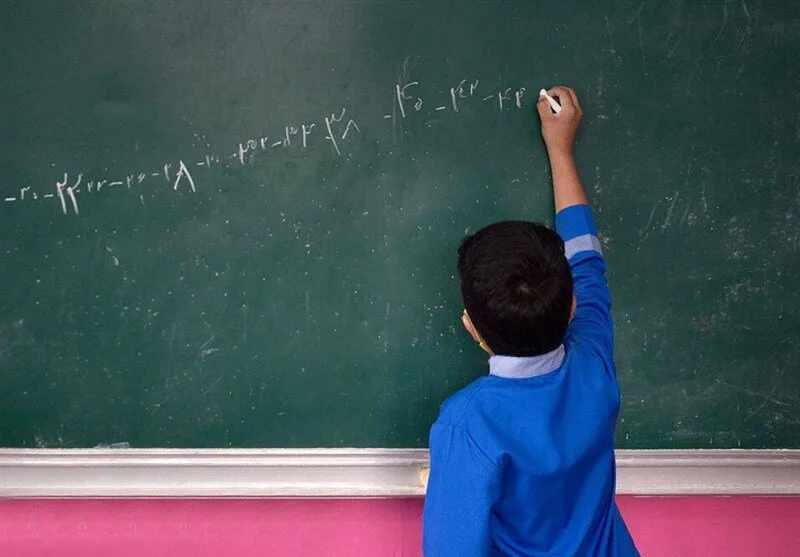
Ali Latifi, the head of the Organization for Research and Educational Planning, announced significant changes in the textbooks for first and second grade in his latest statements. He declared that the mathematics books for these two grades will be published in two volumes, with the first volume used in the first 3 to 4 months of the school year and the second volume used later in the year.
Transformation in Curriculum Content
Latifi referred to the challenges that families face in this regard and said: "Currently, the titles of textbooks are very numerous, and it cannot be said that there are no problems in any book. In any human endeavor, there is always the possibility that a number or concept may be expressed in a way that becomes contentious. However, we do not have gross content errors that could lead to serious problems in the textbooks."
Read more: Gharibabadi: Food security must be protected from war and sanctions
He further added: "Many of the issues raised as errors in textbooks are not errors, but rather matters of scientific disagreement. For example, in history books, some experts may consider an event to belong to one period while others may attribute it to a later period."
Increase in Activities and Exercises
The head of the Organization for Research and Educational Planning, in response to the question of whether the content of supplementary educational books will be added to the textbooks, said: "This issue faces a dual challenge. If we add supplementary activities to the textbooks, the question arises as to why the volume of the books is large. At the same time, if we do not add these activities, it is questioned why families should refer to supplementary educational books."
Latifi also referred to the overall approach of the organization and said: "Our goal is to increase the activities and exercises in the textbooks to reduce families' reliance on supplementary educational books." He emphasized that the reading skills in the Persian books for first and second grade have been specifically addressed based on the PIRLS study framework to help enhance students' reading literacy.
These changes in textbooks not only help improve educational quality but can also lead to a reduction in the financial burden on families. However, Latifi emphasized that this process is a gradual transformation and requires collaboration and cooperation from all educational stakeholders.
Finally, Ali Latifi expressed hope for the future of education in the country, stating that these changes will be a step towards improving students' learning experiences and meeting their educational needs.
Read more: Farzaneh Sadegh: The SMS for depositing one billion tomans for housing applicants is not feasible · Fundamental changes in the first cycle of secondary school textbooks by Seyyed Mahdi Bagherian