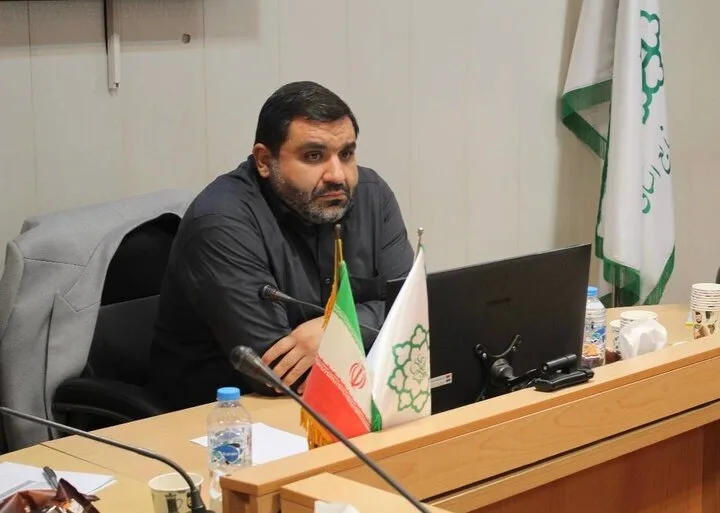
Ali Alaei-Dini, the Director General of Planning, Budget, and Performance Control of the Tehran Municipality, refers to the 'I Am the Mayor' plan as one of the most prominent symbols of participatory governance in the capital. This plan, relying on participatory budgeting and direct communication with citizens' priorities, has managed to bring about serious changes in the architecture of urban governance.
The Role of 'I Am the Mayor' in Urban Management Transformation
Alaei-Dini believes that the strategic capacity of the 'I Am the Mayor' plan has received less attention from the perspective of transformation in urban governance. He considers this plan as a driving force for transitioning from the traditional model of municipality to a new generation of urban management, referred to as 'Municipality 2.0'. In this generation, citizens play an active role not only as service recipients but also as active participants in identifying issues, setting priorities, and evaluating the results of city administration.
Read more: Sadegh Norouzi, reformist political activist, has passed away
Change in Decision-Making Methods
Alaei-Dini emphasizes that to understand the true importance of 'I Am the Mayor', it should be evaluated beyond just a participatory plan. This plan is not limited to the number of participants or selected projects, but rather demonstrates its capacity for gradually changing the decision-making methods and the relationship between the municipality and citizens.
He continues that public participation in city affairs is not limited to this plan, and efforts are being made in various sectors of the Tehran municipality to utilize citizens' participation in identifying issues and improving services. For this reason, public participation is a comprehensive approach in urban management and should not be confined to a specific plan.
Municipality 2.0 and Interaction with Citizens
Alaei-Dini refers to the concept of 'Municipality 2.0' and introduces it as a transformation in the relationship between urban management institutions and citizens. In this model, the municipality, as a large organization for planning and providing services, develops another capacity alongside its responsibilities; that is, creating opportunities for organized citizen participation in city administration.
He explains that in Municipality 2.0, in addition to specialized and executive capacities, local knowledge and the lived experiences of citizens are also used to better understand issues and shape decisions. This change allows citizens to be recognized as key components in the decision-making process.
The Importance of Participatory Budgeting
Alaei-Dini also addresses the importance of participatory budgeting in shaping Municipality 2.0, stating that a budget is not just a financial document, but a reflection of the operational priorities of a public institution. He says that when resources are allocated, it becomes clear which issues are prioritized in practice.
He emphasizes that budgeting is one of the most critical points of connection between policy-making, planning, and execution. For this reason, 'I Am the Mayor' has become a prominent symbol; as it vividly reflects public participation in decision-making regarding the prioritization of public resource expenditures.
Read more: The martyrdom of Mehdi Mohammadzadeh, a Basij fighter in operational areas of the southern country · Determining the status of 97% of buildings damaged in the third imposed war