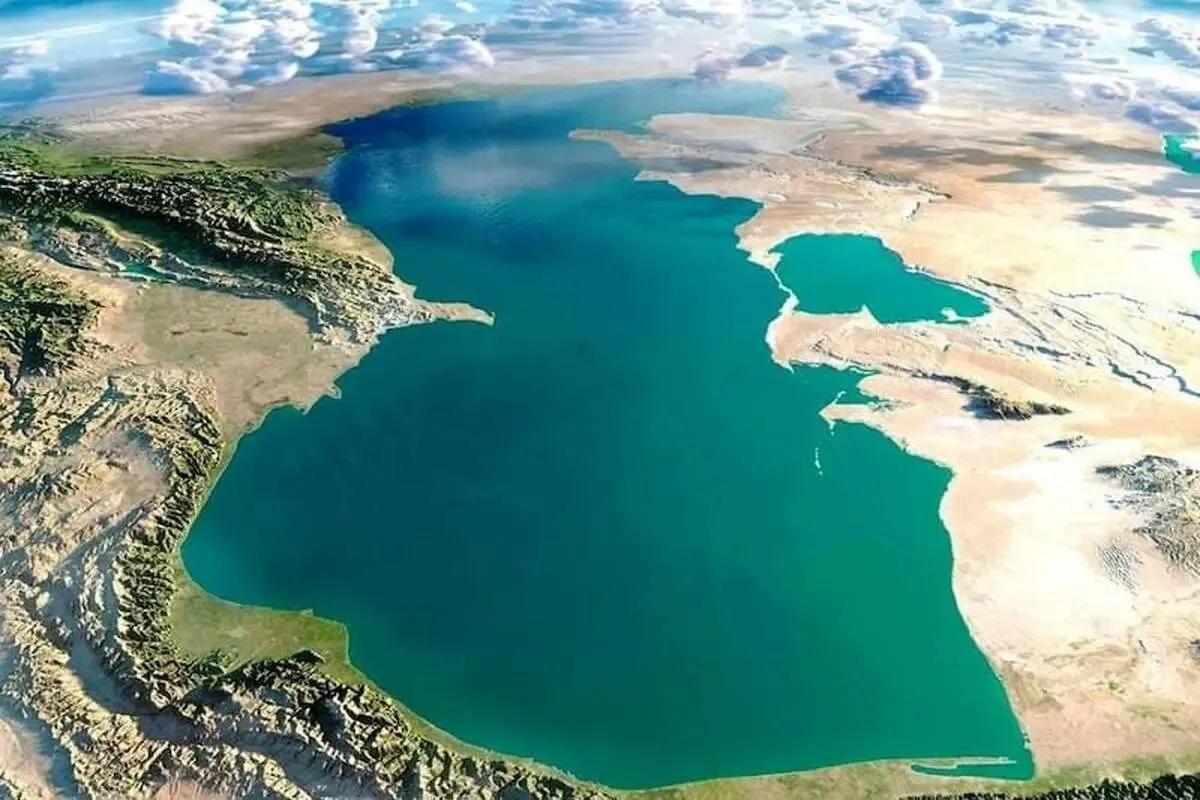
Ahmad Reza Lahijanizadeh announced at the COP 7 press conference that the average annual drop in the Caspian Sea level has decreased from about 7.5 centimeters during the period from 1995 to 2020 to about 20 centimeters from 2020 to 2025 and 23 centimeters in 2026. This concerning trend could continue for the next 25 years, increasing the necessity for cooperation among the five coastal countries to adapt to its consequences.
Consequences of the Caspian Sea level drop
The Deputy for Marine Environment and Wetlands of the Department of Environment stated: "The drop in the level and depth of the Caspian Sea is one of the most serious issues raised at the seventh conference of the members of the Tehran Convention (COP 7)." He added that this drop in level, based on conducted studies, has extensive impacts on the five coastal countries of the Caspian Sea.
Read more: Discovery of a 10,000-year-old mammoth tooth in California; a window into the Ice Age
Lahijanizadeh continued: "Since 1995, the trend of declining levels has begun and in the early years, it had little impact, but since 2020, the rate of decline has significantly increased." This official emphasized that the northern part of the Caspian Sea, due to its shallower depth, is facing more severe retreat, and in some northern areas, the retreat has reached about 10 to 20 kilometers.
Joint actions for adaptation
He also pointed out that the effects of this phenomenon are more pronounced in Golestan Province in Iran, and the provinces of Mazandaran and Gilan will also be affected by the drop in the Caspian Sea level. Lahijanizadeh clarified: "A regional plan for adapting to the drop in the Caspian Sea level is being developed, and the general outlines of this plan are set to be signed by the relevant countries during COP 7."
According to conducted studies, the main factor for the drop in the Caspian Sea level is climate change and increased evaporation. Lahijanizadeh stated: "The rise in temperature has intensified evaporation in the Caspian Sea, and this factor has the largest share in the reduction of water levels." Additionally, about 80 percent of the water entering the Caspian Sea is supplied through the Volga River, and Iran's share of river inflow to the Caspian Sea is estimated to be about 5 percent.
He concluded by noting: "Negotiations among the five countries regarding the factors affecting water inflow to the Caspian Sea are ongoing, but these negotiations are a time-consuming and complex process due to the differing interests of the countries."
Read more: Major climatic changes for Iran will begin soon · The Minister of Science of the Islamic Republic of Iran traveled to Riyadh