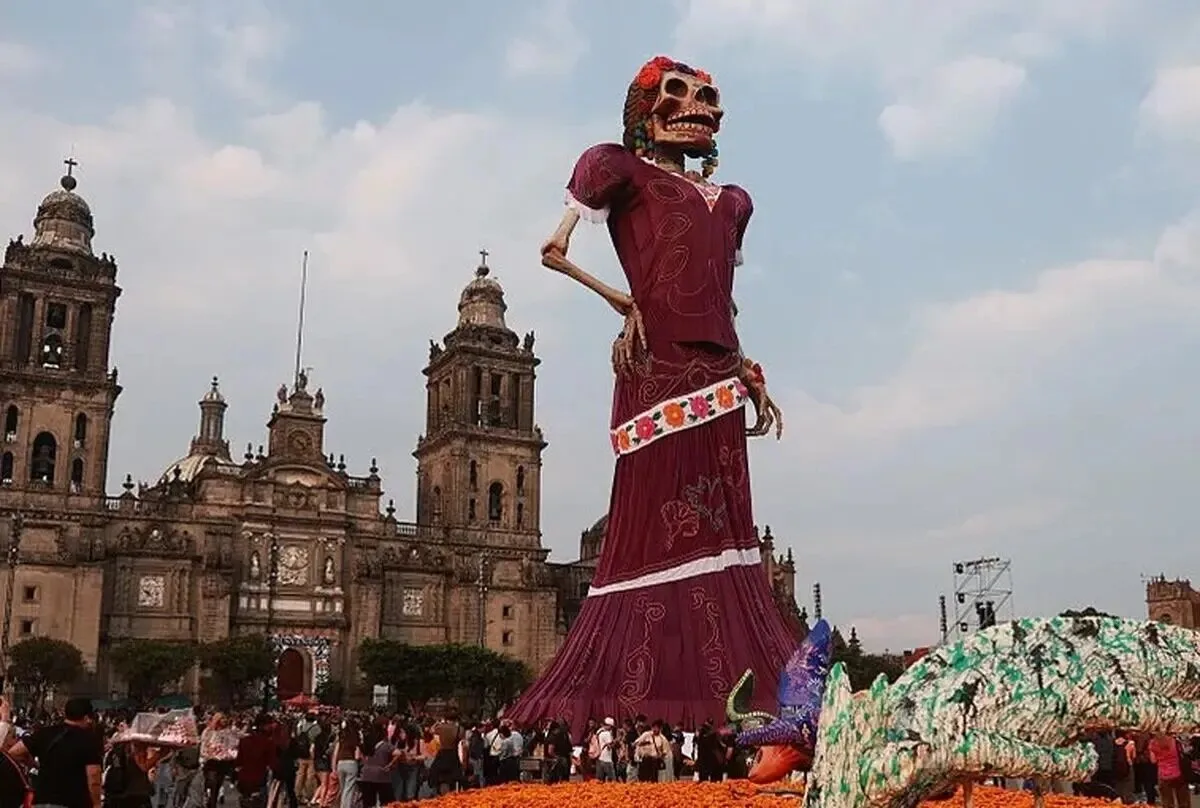
Orange Halloween pumpkins and Christmas lights can be seen in various corners of Iranian cities these days. Young people who embrace these celebrations for a unique photo opportunity or to experience a special night may not stray from their culture, but a bitter and thought-provoking question arises: Why have traditional Iranian celebrations dimmed for the new generation, while imported occasions are celebrated with enthusiasm?
Why Have Iranian Celebrations Been Marginalized?
The reality is that cultural identity in today's world is not a fixed and uniform concept. An Iranian youth may celebrate Nowruz with family, experience Yalda Night, and at the same time attend a Halloween party. These choices do not necessarily contradict each other. However, the issue begins when a culture fails to introduce and recreate its heritage for the new generation.
Read more: Pedram Karimi and Yasaman Shah Hosseini in a Family Frame
Ahmad Bokharaei, a sociologist and university professor, attributes the reception of celebrations like Halloween and Christmas more to modernity and innovation. He emphasizes that the appeal of Christmas for many Iranians does not imply a religious inclination towards Christianity, but rather this occasion has transformed into a celebration for fun and experiencing a different lifestyle.
Commercialization and the Appeal of Celebrations
Majid Abhari, a social pathologist, points to the weak performance of cultural institutions in promoting and honoring Iranian rituals as one of the factors contributing to the spread of these occasions. He also emphasizes the role of social media and satellite channels, considering the low level of social vitality as a significant factor in the inclination towards these celebrations.
In today's economy, experiences that can be visualized and shared have a greater chance of being noticed. A party with unique costumes and different decorations can easily turn into dozens of images and videos. Meanwhile, many of our cultural experiences, despite their historical depth, have not gained such media potential.
Given these conditions, while the new generation's awareness of Iranian celebrations has faded, non-Iranian celebrations have easily become a part of daily life. Here, there is competition between two storytelling methods; the culture that is narrated better is seen more and has a greater chance of becoming part of daily life.
Read more: Arabic Bridal Table; A Feast of Lebanese and Syrian Flavors · The Anahita Temple, the Shrine of the Water Angel in Kangavar