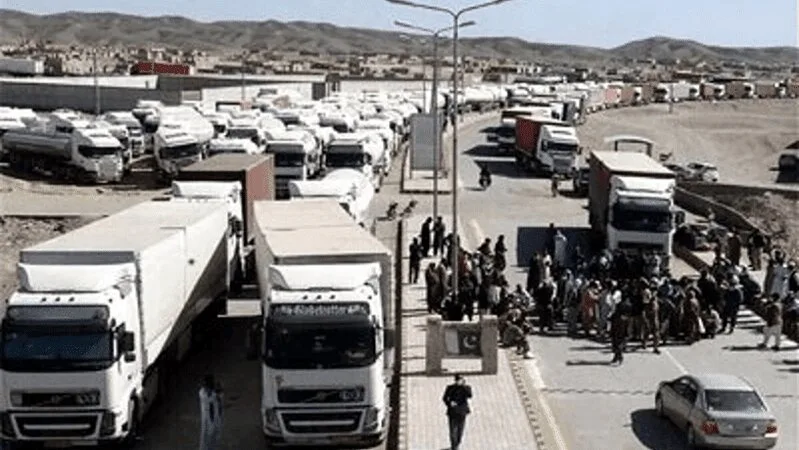
The stoppage of 3000 trucks at the Rimdan border located in southeastern Sistan and Baluchestan has created serious challenges for trade exchanges between Iran and Pakistan. This border, which has become the busiest route for the exchange of goods between the two countries, is currently facing delays of 20 to 30 days, increasing transportation costs and disrupting fleet circulation.
Border Challenges and Their Impact on Trade
Despite the emphasis on increasing trade exchanges between Iran and Pakistan to an annual ceiling of $10 billion, operational limitations at the Rimdan border and challenges in utilizing Pakistan's ports have prevented the full exploitation of the transportation capacities of both countries. Currently, about 3000 trucks are waiting to cross the border, a situation that not only leads to increased transportation costs but also reduces the actual capacity of this crossing.
Read more: The prices of Saipa and Iran Khodro vehicles were announced on October 15, 2026
One of the main obstacles on the Pakistani side of the border is the multitude of agencies involved in border processes and the difficulty of coordinating among them. The Pakistan Customs, security forces, and the logistics company NLC play roles in this operation, which increases the time for goods to pass. Additionally, the limited weighing capacity and the necessity of unloading cargo from one truck and transferring it to the fleet on the other side lead to a process of "transshipment" that involves additional unloading and loading operations.
Proposed Solutions to Improve the Situation
Gradually implementing direct truck transport using the capacity of transportation agreements and the TIR (Transports Internationaux Routiers) mechanism, if agreed upon by both countries and with the necessary execution requirements in place, could help reduce stoppages. Furthermore, reforming existing procedures, developing truck parking areas, increasing the capacity of weighbridges, and creating warehouses and cold storage to provide necessary services for drivers at the Rimdan border are among the actions that should be considered.
The use of Pakistan's ports for supplying Iran's imported goods also faces challenges. According to Mohammad Malekzadeh, head of the International Transport Companies Association of Iran, during recent developments and disruptions in maritime routes, several shipments at Pakistan's ports, including Karachi, Gwadar, and Bandar Qasim, have been unloaded or remain unresolved. There is potential for the transportation of certain goods like rice and tea from Pakistan, but to transform this country into a sustainable corridor for meeting Iran's needs, operational agreements and necessary infrastructure are required.
The key point in achieving the $10 billion trade goal between Iran and Pakistan is not only to increase the number of trucks or temporarily use the ports of this country but also to reduce waiting times at Rimdan, develop border infrastructure, and facilitate direct transport. Additionally, to enhance the resilience of Iran's supply chain, it is necessary to develop the route through Pakistan alongside other crossings and alternative routes, rather than turning it into a new bottleneck for the entry of goods.
Read more: Abdolnaser Hemmati at the Annual Meeting of the International Monetary Fund and World Bank in Bangkok · Increase in Attacks on Ships in the Strait of Hormuz and Its Impact on Oil Exports