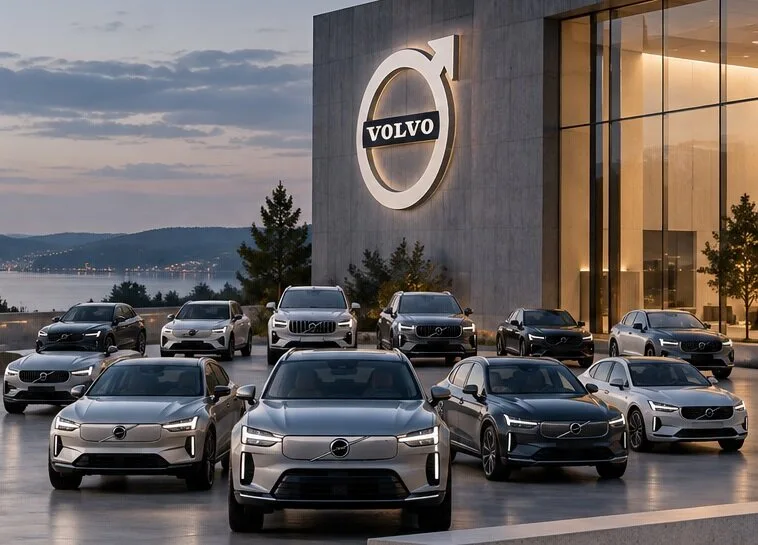
Volvo, the Swedish automaker with nearly a century of history, will soon begin producing seven new vehicles for Western markets and six vehicles for Eastern markets. This decision comes following fundamental changes in the company's production and design strategy for future vehicles. These vehicles will include all-electric models and third-generation hybrid cars that will be produced locally in Western markets.
Local Development and Software-Centric
Volvo has decided to produce vehicles locally in Western markets to facilitate production and better respond to market needs. This means that the vehicles will not only comply with environmental standards but will also be specifically designed and produced for the local community and culture. Additionally, these vehicles will be developed on a shared software architecture that will help enhance their performance and features after sale.
Read more: Amazon triples Nvidia GPU orders: Insatiable demand for artificial intelligence!
Collaboration with Geely in Eastern Markets
In Eastern markets, Volvo's strategy will be somewhat different. The company intends to work more closely with the Geely Group, utilizing shared platforms and components. This collaboration could significantly reduce product development time and enable Volvo to respond more quickly to the needs of Asian markets. This decision reflects strategic changes in Volvo's thinking regarding global markets, which is in pursuit of evolution and continuous improvement.
Given these developments, Volvo is moving towards producing a "software-centric vehicle." These vehicles are designed so that various components can be updated via software even after sale. This approach allows customers to keep their vehicles up to date with new updates and improved features.
Volvo's new plans clearly indicate a major transformation in the automotive industry. By creating two distinct product paths for East and West, rather than a single global portfolio, the company aims to address the specific needs of each market. These changes could help improve the performance and sales of the company and position it better in competition with other leading automakers worldwide.
Overall, Volvo's new plans not only demonstrate the company's commitment to modern technologies and market needs but could also serve as a model for other automakers on how to adapt to the rapid changes of the modern world and innovate in their products and services.
Read more: Skyworks takes flight; 9.8% increase following the approval of a $22 billion merger with Qorvo · Increase in vehicle scrapping certificate prices; once again victimizing car buyers