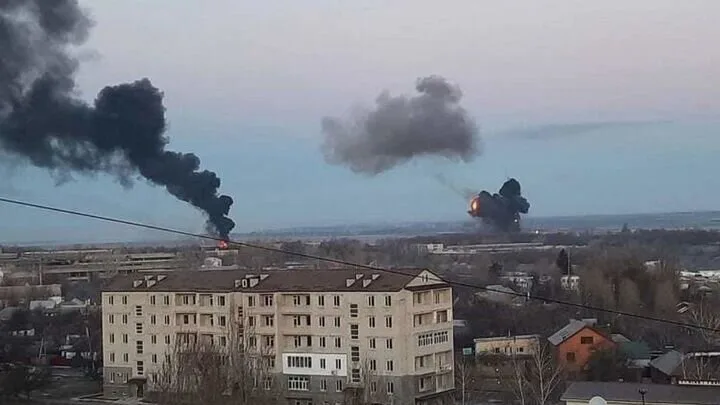
The U.S. midterm elections, which will be held this November, are seen as a test of tolerance for war with Iran. While electoral indicators suggest a relative advantage for Democrats in polls, the issue of war with Iran has become one of the key concerns for voters. Polls indicate that the war with Iran, alongside economic and tariff issues, is among the most important concerns of the public.
Changes in Political and Military Costs
According to reports, in an Emerson poll, only 34% of respondents supported U.S. attacks on Iran, and satisfaction with Donald Trump's performance has dropped to 32%. These figures clearly show that war is no longer merely a foreign policy issue but has become an important factor in the political calculations of American voters. In such circumstances, if the military and economic costs of war increase, the options available to the White House for continuing this war will be limited.
The Role of Congress and Its Impact on Policies
Recent months have shown that even in a Congress controlled by Republicans, there are divisions regarding the continuation of war with Iran. For instance, in July, the House of Representatives voted 214 to 208 in favor of supporting the cessation of hostilities, and efforts were made in the Senate to advance a war powers resolution. These developments indicate that the issue of Iran could become a point of convergence for two divides: the partisan divide and the divide between loyalty to the President and concerns about the strategic costs of war.
Although the composition of Congress may change after the elections, it should not be expected that Washington will easily abandon its strategy of pressure and competition against Iran. U.S. policy towards Iran is not the result of a personal decision but is shaped by a network of security interests, regional calculations, and nuclear concerns. Congressional research reports also indicate that Congress has significant tools for overseeing Iran policy and sanctions.
Ultimately, the midterm elections may hold more diplomatic opportunity for Tehran than fundamental changes in U.S. strategy. If public pressure and the economic costs of war increase, Washington's motivation to find a political "exit strategy" from the conflict could be strengthened. This does not mean an automatic softening of the U.S. position but rather an increase in the value of diplomacy as a tool for reducing strategic costs.
It should be noted that elections may change the timing of diplomacy, not necessarily lead to the end of the war. Changes in the balance of costs and U.S. foreign policy options after the elections could lead to serious changes in the relations between the two countries. In this regard, the ability to bear the costs of war is as important as the ability to inflict damage. Therefore, the November elections could be seen as a test of America's internal capacity to continue costly policies towards Iran.
Read more: Mohsen Namjoo talks about missing his audience in Iran