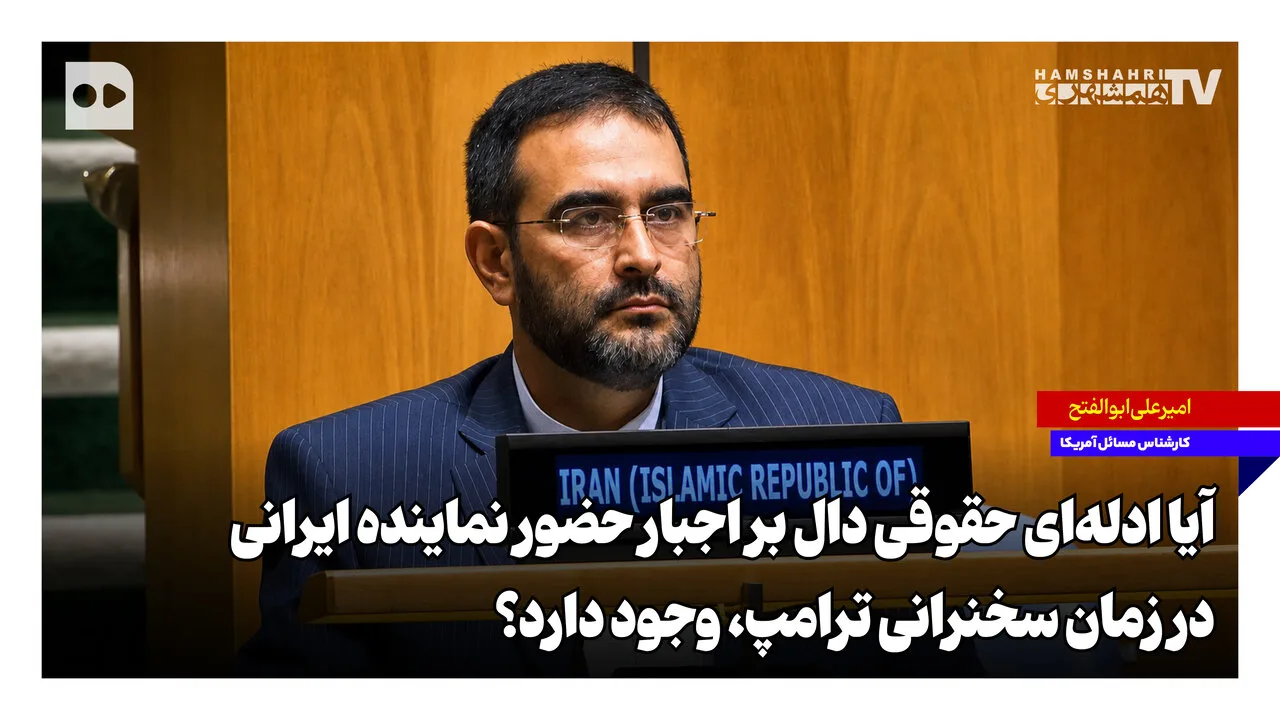
The presence of an Iranian representative during Donald Trump's speech, the former President of the United States, is a matter related to complex diplomatic and legal dimensions. In this context, Amirali Abolfath, an expert on American issues, has examined various aspects of this topic and emphasized that the decision regarding the presence of the Iranian delegation at international meetings is determined based on diplomatic policies and opportunities for accountability.
The Impact of Diplomatic Policies on the Presence of Representatives
Countries' diplomatic policies always play a key role in determining the presence or absence of representatives at international meetings. Abolfath points out that these policies become particularly important during times when there is a need to respond to sensitive and key speeches. In these circumstances, the decision regarding the presence of the Iranian representative can be influenced by factors such as international relations, political positions, and also the internal conditions of the country.
Legal Aspects and Opportunities for Accountability
From a legal perspective, the presence of an Iranian representative at such meetings can be considered a tool for expressing the country's positions and responding to international accusations and concerns. This allows representatives to explain and clarify Iran's viewpoints in an official setting, thereby contributing to the strengthening of public diplomacy and international relations.
Abolfath also points out that the absence of the Iranian representative can have specific consequences. Not participating in an important meeting can be seen as a sign of unwillingness to engage or be accountable. Therefore, the choice between the presence and absence of the Iranian representative must be made carefully and based on comprehensive analyses.
Whether in situations where the representative is present or when absent, the consequences of these decisions can have profound effects on Iran's credibility and relations with other countries. In fact, this process requires a thorough assessment of domestic and international conditions as well as consultation with legal and political experts.