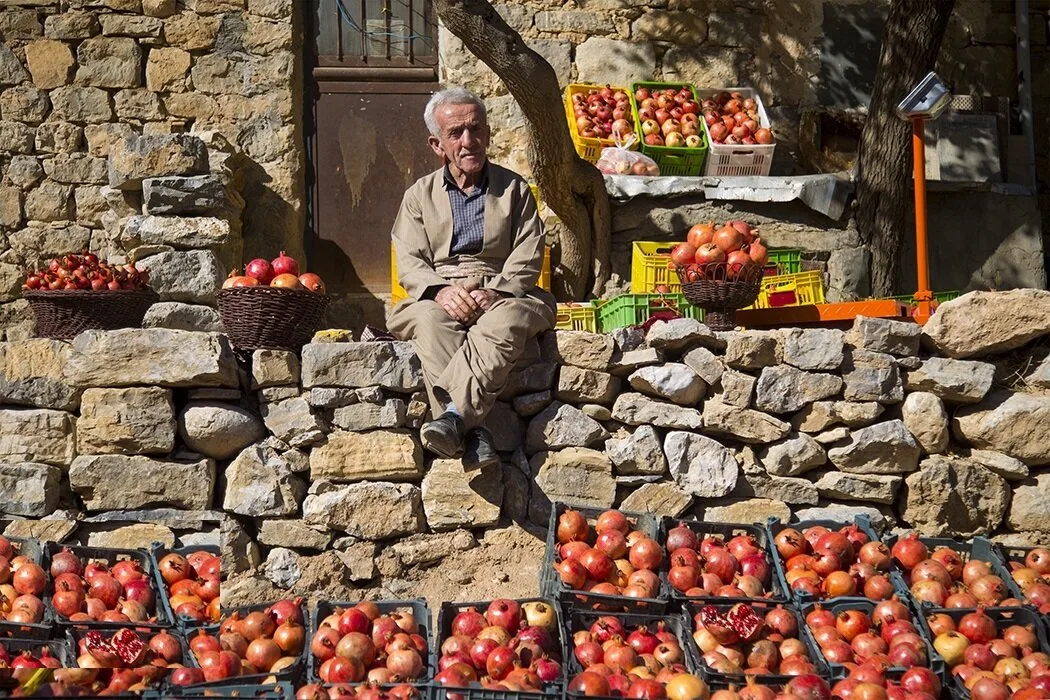
Pomegranates in the villages of Selin, Zhivar, Nav, and Delemerz have reached their peak in the pomegranate orchards of Hooraman. Thousands of tons of Dandeh-Siav, Meles, Yarali, Tashi, and Kohe (types of pomegranates from the western climate of Iran) hang from the branches of the trees, waiting to be handpicked very soon for the 'Henaraneh' festival (National Pomegranate Festival). After being harvested, their premium quality, with a smooth and firm skin, will be sent to wooden baskets for wholesale. Alongside this, the cracked and crushed ones will also reach the pomegranate pickers among over 650 hectares of green orchards on the slopes of the Zagros, nourished by the springs of Sirwan and Lileh, for fresh consumption, and will mostly be set aside by the women for making pomegranate seeds and paste.
The Pomegranate Festival of Hooraman and the Narrative of Hojan Amiri
These days, the residents of the terraced villages of Hooraman are busy with the harvesting of pomegranates and hosting numerous tourists for the National Pomegranate Festival. Hojan Amiri, the daughter of Kak-Fateh, says about this: "The pomegranate festival is held in many provinces where pomegranates are native... The villages of Hooraman are like them. But the pomegranate festival here has been nationally registered, and the pomegranate orchards here attract tourists during the harvest season... If you ask me why? I would say first because of the beauty of the terraced layout of our villages and second because of social media." She produces various content for her followers on her social media page until mid-autumn when some of them become guests and customers for their pomegranate products.
Read more: Iraqchi Communicated Iran's Conditions for Reopening the Strait of Hormuz
The Women of Selin and Their Efforts
The sweet hardships of Henaraneh have now increased the workload for women whose husbands are farmers; they place the wooden baskets they have woven themselves in front of them, sweep the cold and stone storages to store the surplus pomegranates, and carry pots and gas stoves from their homes to the orchards. Soghra Panahi, a resident of Selin, known as Dada Soghra, is more skilled than the other women in making pomegranate candies. She tells a story of effort and struggle for her family's advancement with the deep and old scars on her hand: "I became a worker in the orchards of the villagers due to lack of my own farm. Don’t look at me now that I just sit in the middle of the orchard and seed pomegranates by the kilo..."
These women are lovingly and diligently preparing for the Henaraneh festival. This festival has brought blessings not only for them but for the entire village, preventing fewer pomegranates from going to waste due to the lack of cold storage. Mohammad, one of the farmers and the head of the festival organizing committee, says: "The approximate time for the festival is between the second half of Mehr and the first half of Aban. In a warm year, the festival is held later..."
As the festival approaches, the ringing of phones among the residents of Hooraman from Selin to Zhivar increases, and the farmers are making the necessary preparations. Meanwhile, the fame of pomegranate paste making in Selin is expanding with Chamin Sheikhi. He says: "From 50 kilos of juicy pomegranates that have simmered on the fire for a few hours and separated from their skins, 2 kilos of thick, festive paste is produced. I have customers who take this paste as souvenirs to the other side of the world." The pomegranates in the villages of Hooraman are ripe and waiting for the festival and customers from near and far.