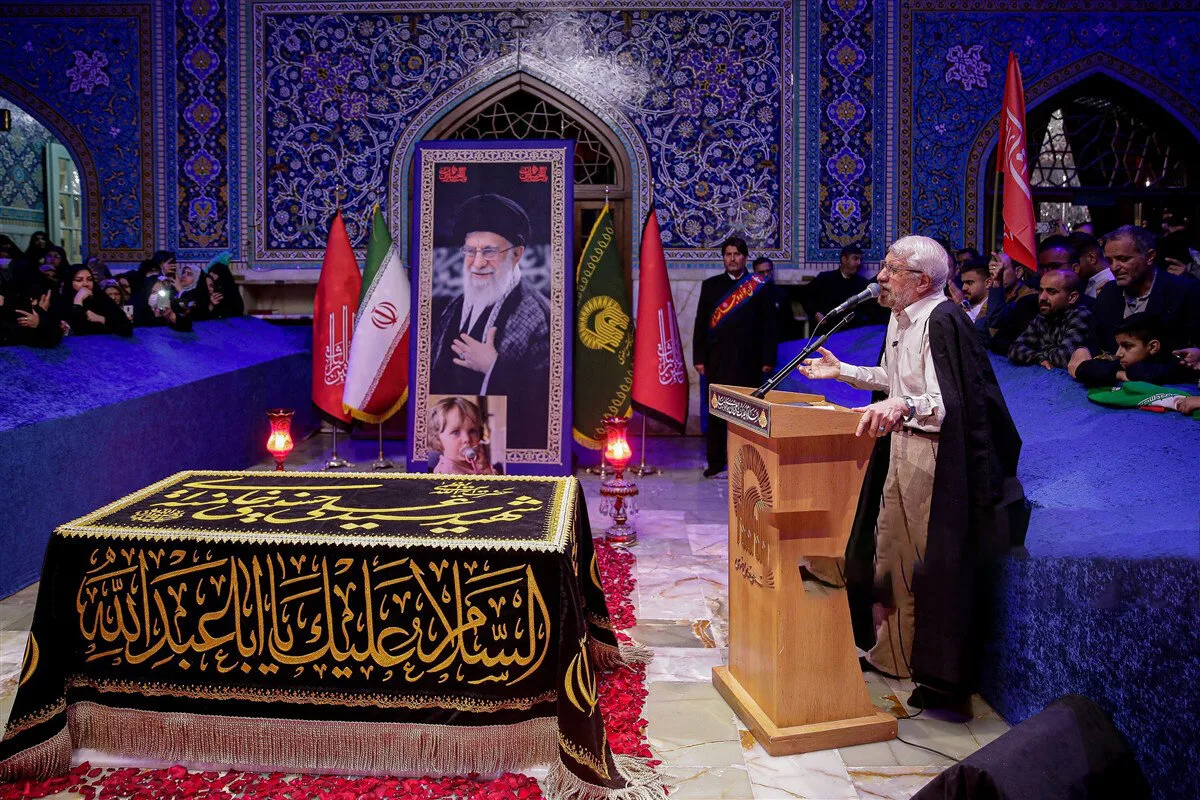
The mourning ceremony and epic recitation next to the grave of the martyr leader of the Islamic Revolution, Ayatollah Khamenei, were held on Saturday evening, October 25, 1405, in the Dar al-Dhikr courtyard of the holy shrine of Razavi. This ceremony created a spiritual and emotional atmosphere for the attendees, with the presence of mourners from the Ahl al-Bayt, Seyyed Reza Narimani and Haj Sadegh Ahangar.
Enthusiastic Presence of Admirers
The enthusiastic presence of admirers and lovers of the Ahl al-Bayt at this ceremony reflects the deep devotion of the people to the martyr leader of the revolution and his values. Alongside the mourning and epic recitation, participants depicted a space of empathy and love by mentioning the names of the infallible Imams and the martyrs of Karbala. The mourners filled the hearts of the attendees with the memory and name of the martyr leader of the revolution with their warm and pleasant voices.
Read more: Eggplant Liteh; The Autumn Flavor that Captivates Every Iranian's Heart
Spiritual and Social Consequences of the Ceremony
This ceremony was not only an opportunity to express devotion to the martyr leader but also strengthened social and cultural bonds among different generations. Ayatollah Khamenei is recognized as a symbol of unity and resistance in contemporary Iranian history, and holding such ceremonies can help sustain these values. Many participants expressed their emotions, keeping his memory alive and passing it on to future generations.
At the end of the ceremony, a group of mourners, by recounting the tragedy and mourning for the precious martyrs of the Islamic Revolution, filled the shrine with love and affection for the Ahl al-Bayt. Such ceremonies serve as a reminder of the cultural and social mission of mourners and artists in preserving and transmitting Islamic values to future generations.
Read more: Milking a Donkey Became Controversial on Live Television · Unveiling of the Bust of Ali Nasirian, a Tribute to a Veteran Master