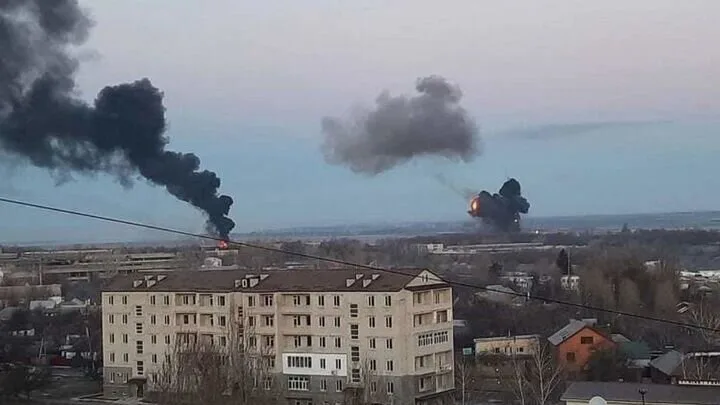
The likelihood of military confrontation between Iran and Ansar Allah with Israel has significantly increased, and Tel Aviv is deeply concerned about the escalation of these conflicts. News sources report that the Israeli regime's army is examining various scenarios to counter missile and drone attacks from Ansar Allah, a scenario that could lead to direct military confrontation between this group and Israel.
Escalation of tensions between Ansar Allah and Saudi Arabia
In recent weeks, tensions between the Ansar Allah movement and Saudi Arabia have sharply increased. Ansar Allah has reported missile and drone attacks against sensitive points in Riyadh and facilities of the Aramco oil company, while Saudi officials have announced that they intercepted several missiles over the capital of the country. These developments have added to Tel Aviv's concerns, and it seems that if this situation continues, the conflicts could turn into a regional war.
Read more: Hezbollah: Iran's decision to stand by Lebanon is definitive
Increased military readiness of Israel
In response to these developments, the Israeli regime has increased the readiness level of its air force and air defense systems, and its military intelligence center has updated warning patterns and operational assessments. In this context, Prime Minister Benjamin Netanyahu's visit to the United States has significantly decreased and has been limited to just a few hours, indicating the sensitivity of the current situation.
Hebrew media have also referred to undisclosed diplomatic and security consultations that, with the mediation of the United States, have led to agreements between the Israeli regime and Saudi Arabia. These agreements include providing information about Ansar Allah's movements to Saudi Arabia. Meanwhile, the United States continues its policy of non-intervention in this conflict and continues its activities in the region after receiving messages from Ansar Allah indicating that U.S. interests are not being targeted.
Security concerns and their implications
Concerns about the escalation of conflicts have become the main topic of military coordination meetings among the United States, the Israeli regime, and leaders of Arab countries. The United States has warned its citizens in the Middle East and has urged them to increase their vigilance. These warnings indicate the potential for U.S. interests in the region to be at risk and for tensions to escalate suddenly.
Given these developments and the increase in regional tensions, the future of these conflicts and their implications for regional security remain shrouded in uncertainty. It seems that future developments will require closer monitoring and scrutiny by international bodies and regional countries.
Read more: China's assistance to Iran during the war with the U.S. and Israel · Israeli army's concerns about the likelihood of attacks from Ansar Allah of Yemen