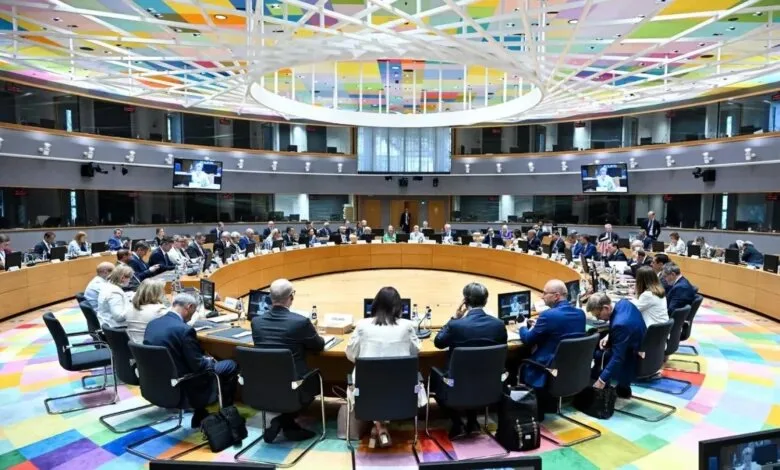
The Gulf Cooperation Council announced yesterday that the planned joint summit of the member states of this council and the European Union, scheduled for October 24 of this year in Riyadh, the capital of Saudi Arabia, has been canceled.
Details of the Meeting Cancellation
This meeting, which was intended to strengthen relations between the Gulf countries and the European Union, was canceled due to a lack of necessary agreements and changing political conditions among the member countries and the European Union. The Gulf Cooperation Council stated in a statement that this decision was made to protect the interests of the member countries.
Read more: Yemeni Army Missile Attacks on Saudi Arabia in Najran and Jazan
Consequences of the Meeting Cancellation
The cancellation of this meeting is likely to impact diplomatic and economic relations between the Gulf countries and the European Union. The European Union is considered one of the important economic partners for the Gulf countries, and this meeting was seen as an opportunity to discuss common issues including security, economy, and climate change. Now, with the cancellation of this meeting, many questions arise about the future of cooperation and relations between the two parties.
While the Gulf countries seek to strengthen their relations with global powers, the cancellation of this meeting may indicate challenges that exist in the path of international cooperation. This decision may lead to a reduction in economic and diplomatic opportunities for all parties and highlight the need for a reevaluation of cooperation strategies.
Future Outlook
Given the recent developments in international relations and the need for more cooperation in various fields, the cancellation of this meeting could serve as a warning for the future interactions of the Gulf countries with the European Union. The member countries of the Gulf Cooperation Council, especially Saudi Arabia, as a key player in the region, must seek solutions to rebuild relations and improve conditions in order to get closer to their goals in terms of development and progress.
Ultimately, this cancellation acts as a reminder of the existing challenges in the realm of international diplomacy and shows that international relations are always subject to changes influenced by political and economic conditions.
Read more: Mark Rutte: There is no threat from Russia to NATO countries · Amr Moussa: The goals of the war against Iran have not been achieved