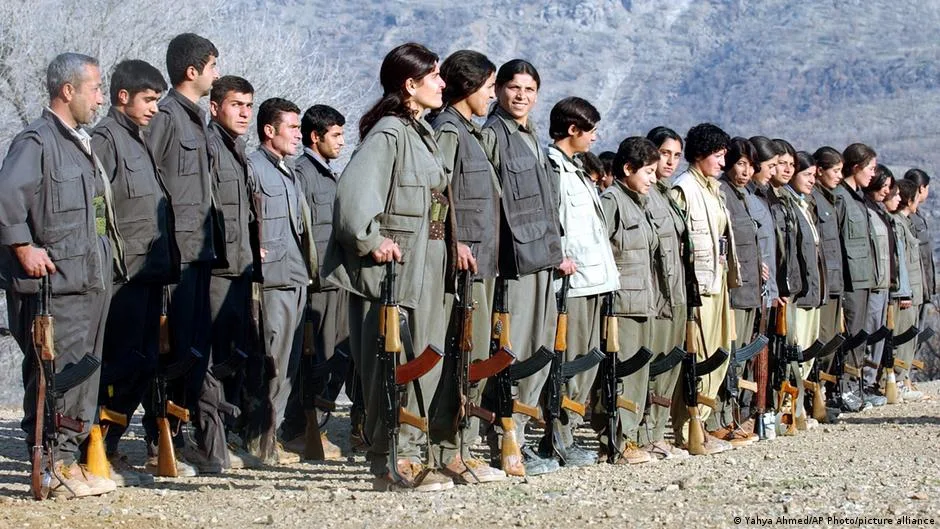
The fate of PJAK (Party of Free Life of Kurdistan), recognized as a branch of PKK (Kurdistan Workers' Party) in Iran, has become an important question due to the approval of the legal framework for the disarmament of PKK in Turkey. This political process has today drawn attention to its implications for PJAK and the status of Kurds in Iran.
PJAK and Political Independence
Rivwar Abdanan, a member of the management council and spokesperson for PJAK, has emphasized that disarmament or dissolution of any Kurdish organization or party is not binding for PJAK. He states that PJAK is an independent political movement and makes its decisions based on political developments within Iran.
Read more: A question for the Minister of Energy will be raised in the Parliament next week
In this context, Abdanan stated: "Weapons no longer hold a central place for us" and added that PJAK's activities are more focused on Iran. In his opinion, to improve the situation of Kurds, the Islamic Republic of Iran must distance itself from the current centralized structure and present a clear political program for fundamental changes.
Challenges Ahead
The fate of PJAK and how the Islamic Republic reacts to new developments is of great importance. Tehran also considers PJAK a terrorist armed group, and armed clashes between PJAK and Iranian security forces, especially in the west of the country, continue.
PJAK's presence in the mountainous Qandil region of northern Iraq and its connections with PKK have raised concerns about whether part of PKK's military capacity may be transferred to PJAK. Mohammad Reza Heyat, a professor at Ankara University, states that if PKK is dissolved but its armed force continues to operate, it cannot be said that the problem is completely resolved.
Abdanan also speaks of the possibility of negotiating with the Islamic Republic in a process similar to what is happening in Turkey. However, the current situation indicates that there are serious obstacles to initiating such a process in Iran. Clashes between PJAK and Iranian security forces continue, and no specific steps have been taken so far to begin a political process similar to Turkey between the two sides.
Abdanan concludes by noting that if the peace process in Turkey is successful, it could serve as a model for resolving the Kurdish issue in Iran and democratizing the Middle East.
Read more: The