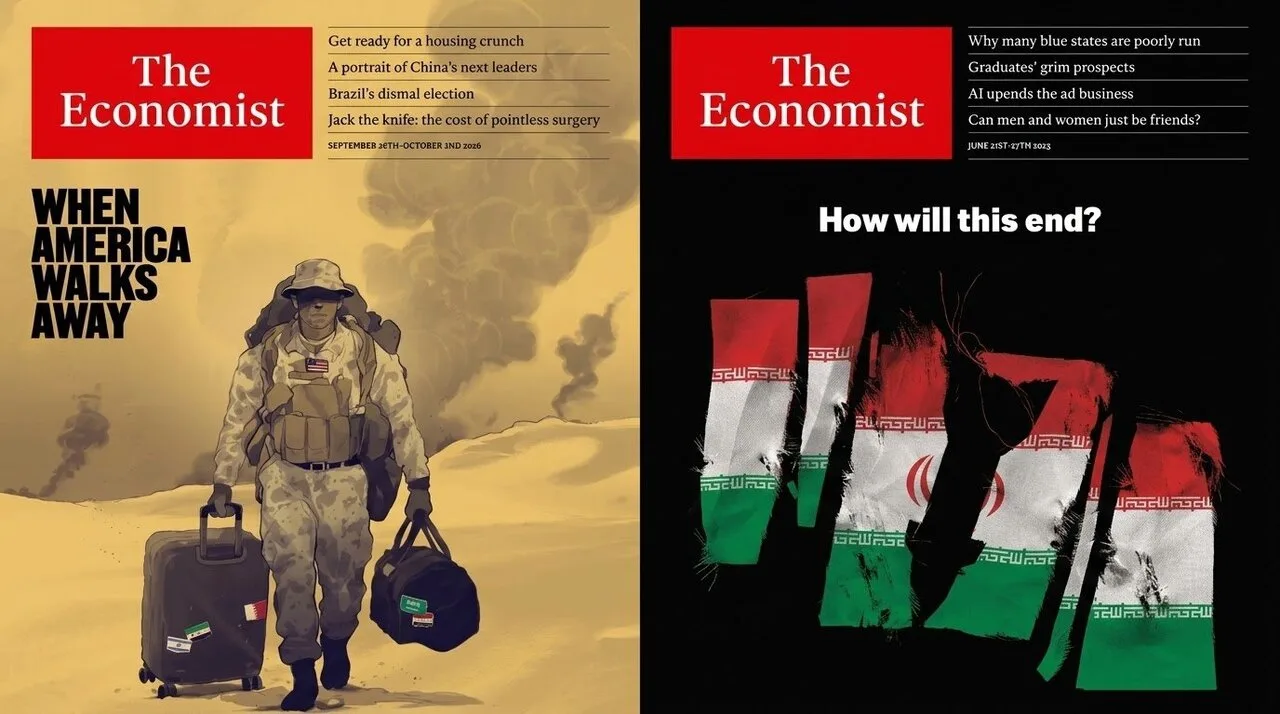
The Embassy of the Islamic Republic of Iran in Libya, in response to The Economist's narrative change, published images of the covers of two issues of the magazine. One of these issues was published after the onset of the 12-day war in Khordad 1404, and the other was printed a few days ago. This action by the embassy clearly demonstrates how international narratives can change under the influence of rapid and complex regional developments.
Transformation in International Narratives
The Economist, in the issue published at the beginning of the 12-day war, analyzed the situation of the Islamic Republic of Iran and somewhat referred to the 'end of Iran.' However, in the recently published issue, this narrative has shifted to 'the end of America's presence in West Asia.' This transformation not only reflects a change in the perspective of reputable international publications but also serves as a reflection of the current geopolitical situation in the region.
Read more: Air and artillery attacks by the Zionist regime on various areas of southern Lebanon
Consequences of This Narrative Change
This narrative change could have multiple consequences for both Iran and the USA. On one hand, Iran, with the perception that it continues to survive and stabilize, may strengthen its positions in the international arena. On the other hand, the USA, considering the new analyses, may reconsider its policies regarding West Asia. This narrative change could influence key strategies and decision-making in the future.
These developments show how political and military events can impact international images and narratives. In today's world, media play a very important role in shaping public opinion and government policies. With changing narratives, key viewpoints and decision-making may also undergo changes. This phenomenon once again emphasizes the importance of monitoring media and their analyses in the context of global policies.
Ultimately, this narrative change is seen as a sign of transformation in global and regional powers. Given the complexities present in the current situation, this issue could influence the future of Iran-USA relations and necessitate deeper analyses.
Read more: Iran reacted to the hostile remarks of the NATO Secretary General · Masoud Pezeshkian: The construction of nuclear weapons is forbidden based on fatwa