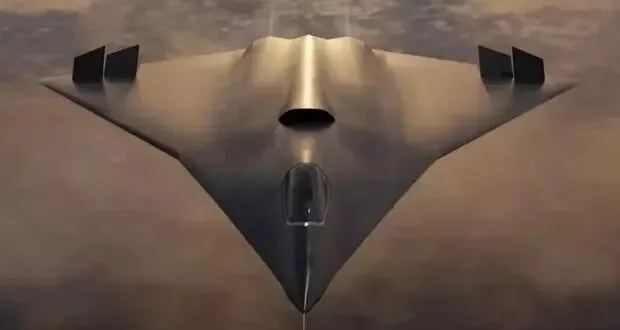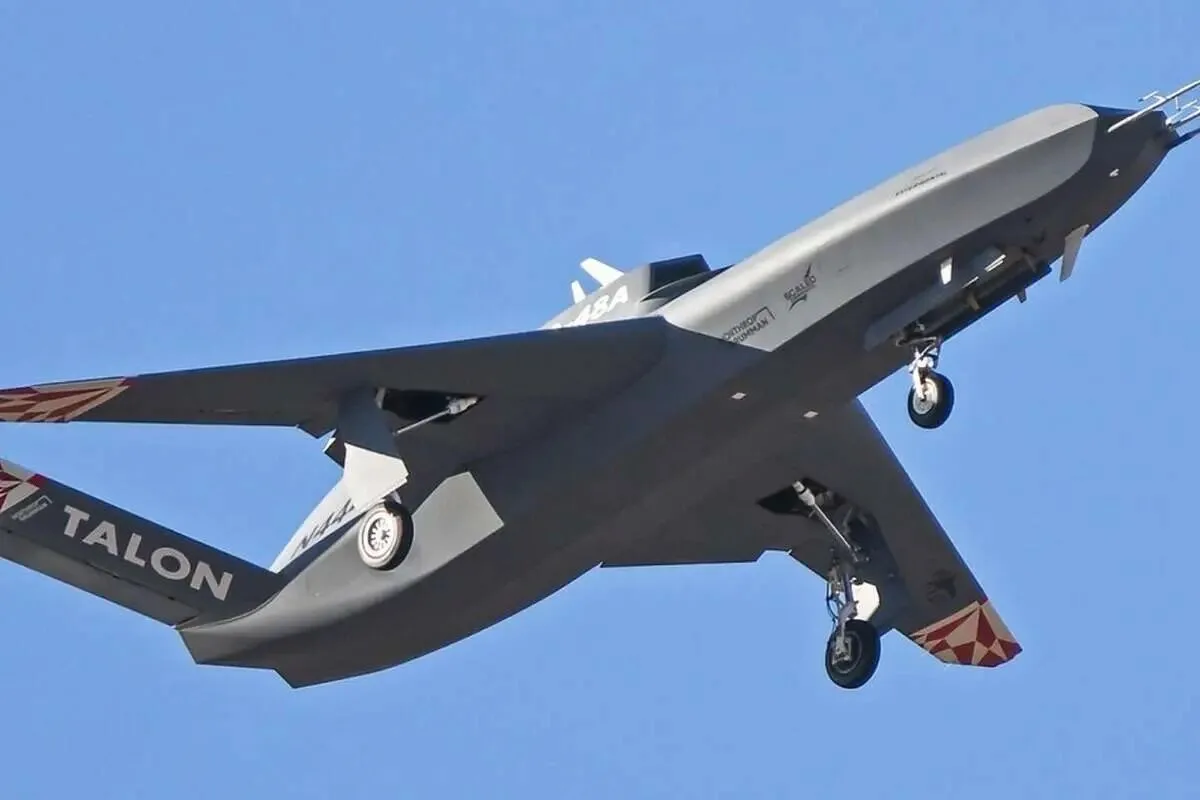
The unmanned combat aircraft YFQ-48A Talon Blue, belonging to Northrop Grumman, conducted its first fully automated flight on October 3, 2026, in California. This flight, held at the Mojave Air and Space Port, is considered a milestone in the American aviation industry. Talon Blue performed taxiing, takeoff, aerial maneuvers, and landing without direct pilot control.
Change in Aerial Missions
The significance of Talon Blue lies in the fact that it is not intended to be merely a reconnaissance or attack drone. This aircraft is part of a generation of combat systems designed to operate alongside manned fighters and take on some of the high-risk missions from pilots. The U.S. Air Force previously announced the name YFQ-48A for the Talon project prototype in December 2025. This aircraft is being developed under the Collaborative Combat Aircraft (CCA) program.
Read more: Iran's Participation with 22 Elite in the Shanghai World Skills Competition
Automation and Cost Reduction
In the envisioned architecture of the U.S. Air Force, combat drones are no longer machines controlled from a distance with moment-to-moment commands from an operator. The idea is that these aircraft can perform a significant portion of their flight and mission autonomously, with humans taking on more of a decision-making and supervisory role.
The flight on October 3 is significant from this perspective. This aircraft did not just maneuver in the sky; it conducted a complete chain of flight operations without direct pilot control. Northrop Grumman has stated that the development of Talon draws on over 500,000 hours of the company's autonomous flight experience. This experience is expected to lead to the creation of aircraft that can make more decisions in complex and hazardous air environments without direct human intervention in the future.
This project, which is progressing under the internal Project Talon program and funded by the company, utilizes modular design and new manufacturing methods to reduce the number of parts, weight, and production costs. The goal of the U.S. is not to create a pilotless F-35, but rather the main philosophy of this program is to develop aircraft that can be produced at a lower cost and in much larger quantities.
The flight on October 3 sends a clear message: the boundary between "drone" and "fighter" is changing. It presents a vision of future aerial combat where a pilot may command a team consisting of manned fighters and autonomous machines instead of piloting a single aircraft.
Read more: Guide to Choosing Xiaomi Gadgets; Smartwatch or Headphones · Yak-130 Fighter; Russia's Effort to Dominate the Skies of Africa and Asia