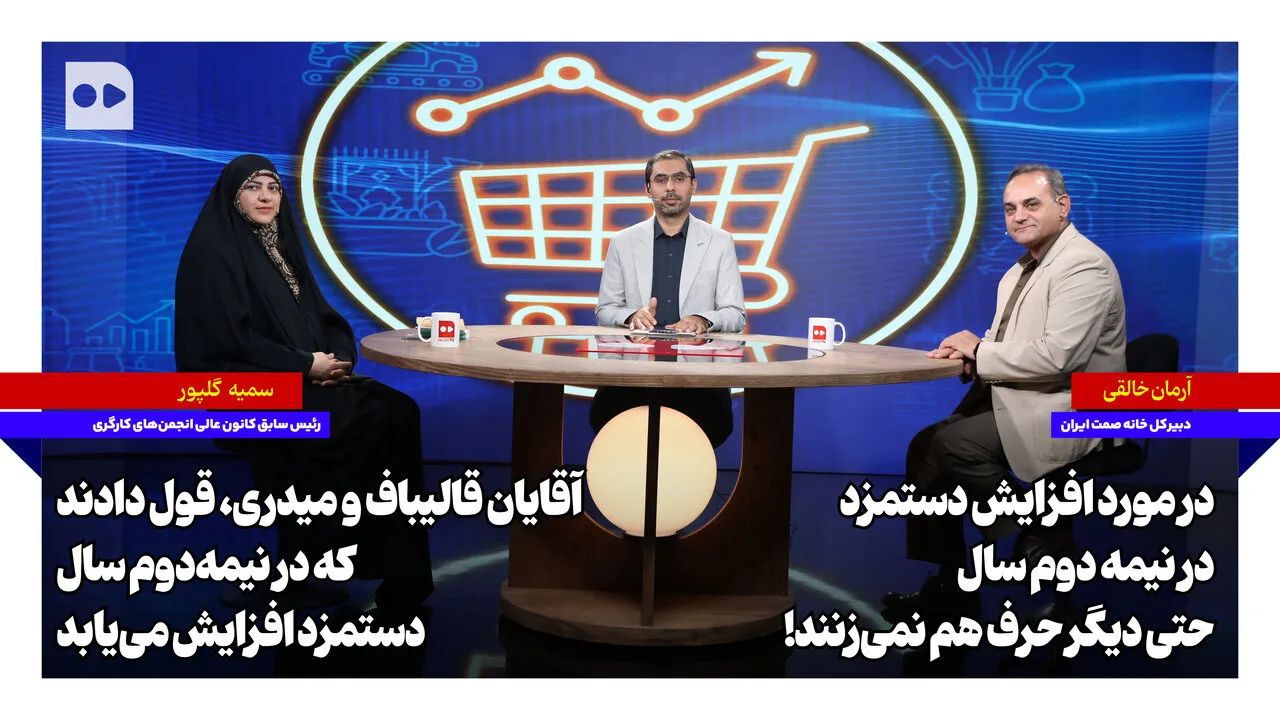
Somayeh Golpour, former president of the Supreme Council of Labor Associations, referred to the current situation of the labor community and mentioned the promises made by officials, stating: "Messrs. Ghalibaf and Midari promised that wages would increase in the second half of the year, but now we must see whether this promise will be fulfilled or not." These remarks reflect the deep concern of workers about the failure to fulfill promises and the erosion of trust in officials.
Unfulfilled promises and lost trust
Arman Khalqi, Secretary General of the House of Industry, Mine and Trade of Iran, also addressed this issue, stating: "They no longer even talk about wage increases in the second half of the year!" This sentence aptly illustrates the despair of the labor community and their uncertainty about officials' promises. While workers expect promises to be kept, bitter past experiences have made them anxious about the future.
Read more: The seventh international exhibition of special vehicles has begun in Tehran
Social and economic consequences of unfulfilled promises
The failure to increase wages in the second half of the year not only negatively impacts the daily lives of workers but can also lead to broader problems in society. Given the rising cost of living and inflation, workers need support and attention more than ever. Therefore, the failure to fulfill promises can lead to a decrease in public trust in government institutions and an increase in social dissatisfaction.
In this regard, Golpour and Khalqi emphasized the need for greater attention to the economic and social issues of workers and called for practical measures to support this group. It seems that only through effective and transparent communication between officials and the labor community can conditions be improved and lost trust be restored.
Read more: The price of the Iraqi dinar in the Tehran market reached 150,000 tomans · Italian Minister of Economy: The increase in energy prices due to the war against Iran will intensify