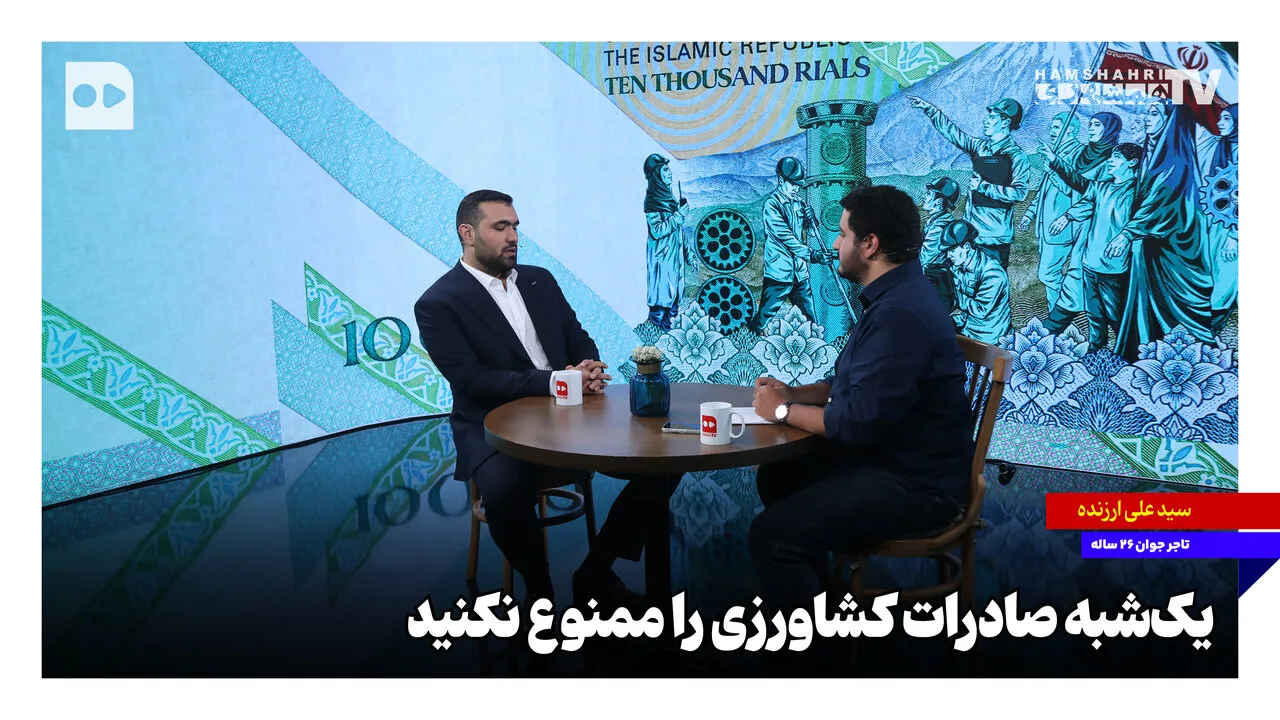
Seyed Ali Arzandeh, a young 26-year-old trader, recently spoke on a television program about the problems arising from the sudden ban on agricultural product exports. He emphasized that such decisions can seriously harm farmers and exporters and that they should be informed in advance so they can plan accordingly.
Consequences of the Sudden Export Ban
Arzandeh, in response to the question of how it affects his work when the production of a product decreases and its export is banned, said: "Sometimes suddenly, for example, on the eve of a holiday, it is announced that the export of a product is banned. Someone may have signed a contract months in advance and committed to supplying the product. Decisions should be announced months in advance; because if the exporter cannot supply the contracted amount, they will be penalized." These statements reflect his disappointment and concern over the lack of stability in the country's export policies.
Read more: Household subsidy vouchers with national codes 7, 8, and 9 are being charged
The Need for Comprehensive Planning for Cultivation
He also pointed out that the reduction in the cultivation of agricultural products should be anticipated in advance. He noted: "For example, those who planted onions last year and suffered losses may not plant onions this year, leading to a decrease in the area under cultivation. The situation must be monitored, and farmers should be told what to plant." Arzandeh's statements highlight the need for oversight and management in the agricultural cultivation process to prevent similar problems in the future.
Referring to past experiences, he said: "Sometimes, all farmers in a region plant the same crop, resulting in an oversupply of that product, while the products that are not planted become scarce." This situation can lead to market imbalances and harm farmers.
In conclusion, Arzandeh pointed out that if a comprehensive cultivation plan is defined for the country and it is specified which products are suitable for each region, market needs can also be managed. He emphasized: "With managed cultivation, there will be no need for sudden export bans." This hopeful perspective can contribute to improving the agricultural and export situation in the country and prevent future problems.
The conversation with Seyed Ali Arzandeh, a young 26-year-old trader, clearly reflects the current challenges faced by farmers and exporters in the country and shows how much the need for precise planning and proper management in this field is felt.
Read more: The new strategy of "Sefars" to exit recession and determine the fate of the Rain project · A tenfold increase in the cost of Saudi oil exports due to war