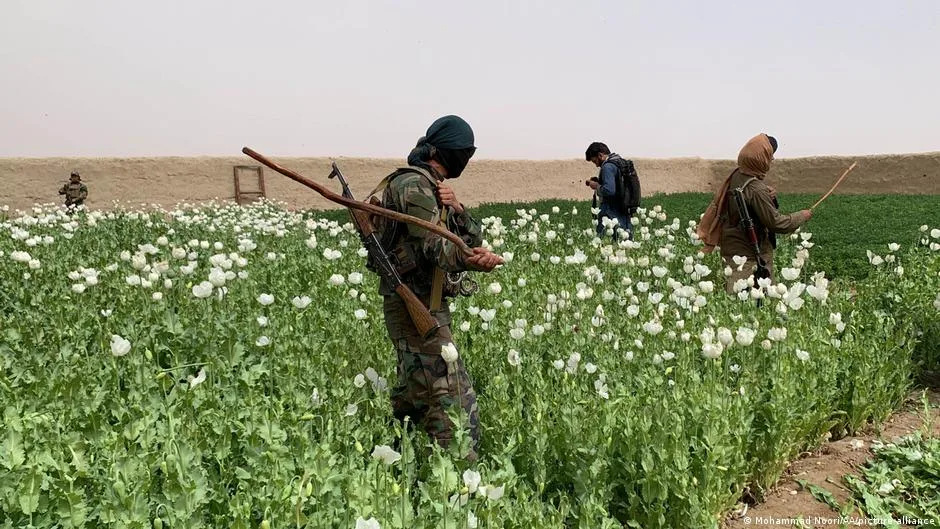
Opium production in Afghanistan has dramatically increased over the past year. The United Nations Office on Drugs and Crime has reported that opium production in 2026 has grown by about 400% compared to the previous year. This increase marks the first significant surge since the Taliban's ban on the cultivation and production of narcotics in 2022.
Increase in Poppy Cultivation and Opium Production
According to this report, the area under poppy cultivation in Afghanistan has risen from about 10,000 hectares in 2025 to over 43,000 hectares in 2026; an increase of approximately 330%. The amount of opium produced has also risen from about 300 tons last year to nearly 1,500 tons. However, the area under cultivation and the production level have not yet reached the levels seen before the Taliban's ban in 2021, when around 200,000 hectares of Afghan land were under poppy cultivation.
Read more: Donald Trump Denies Order to JD Vance to Start Peace Talks with Iran
Poverty and Economic Challenges for Farmers
The United Nations Office on Drugs and Crime considers the worsening poverty and rising living costs as key factors driving some farmers back to poppy cultivation. Income from grain cultivation and livestock farming is insufficient to cover the expenses of many rural families, and some farmers secretly grow poppy to make ends meet. Small poppy farms are hidden among grain fields or within enclosed areas and buildings to prevent their detection and destruction.
Monica Juma, the executive director of this agency, explained this trend by saying: "The fourfold increase in poppy cultivation shows how difficult it is to achieve a sustainable reduction in illegal opium cultivation when poor farmers have no alternatives to feed their families." She emphasized that Taliban officials and the international community must collaborate by investing in rural livelihoods, agricultural infrastructure, and farmers' access to markets.
The Taliban announced an official ban on poppy cultivation and drug production in April 2022, following their return to power in August 2021. This ban has severely impacted hundreds of thousands of farmers and day laborers who depended on the income from this crop. The UN estimates that the income of opium trade intermediaries in Afghanistan has reached about 525 million euros, a figure close to pre-ban levels.
The UN has urged the international community to help create alternative economic opportunities and strengthen agricultural infrastructure to reduce rural communities' dependence on illegal products. This agency has also emphasized the need to reduce global demand for opium.
Read more: Farmers and Livestock Breeders in Italy Fight in the Streets to Save Their Livelihoods · The Third Pomegranate Festival in Khalkhal, a Reflection of Beauty and the Efforts of Gardeners