Pouran Nazemi, a civil activist, poet, and seasoned human rights advocate residing in Iran, is narrating a story where repression and resistance are intertwined. She has faced security pressures since her teenage years and has been imprisoned several times. Her record includes support for political prisoners, defense of women's rights, and the fight against the death penalty.
Bitter Experiences and Small Victories
Nazemi was arrested during the "Women, Life, Freedom" protests in late October 2022 and was transferred to Ward 209 of the Ministry of Intelligence and then to the women's ward of Evin Prison. After some time, she was released on bail, but the pressures on her continued. In the Revolutionary Court of Jiroft, she faced charges such as "Moharebeh" and "Corruption on Earth," which could have led to a death sentence for her. These accusations forced her into a life of hiding, but she never ceased her activities.
Read more: Decrease in the Population of First Graders and Change in the Timing of the Blossom Festival
In December 2025, Nazemi was arrested during the seventh-day memorial of Khosrow Alikordi in Mashhad and was released on bail after weeks of interrogation and imprisonment. Her criminal cases remain open, but she continues her activities. Her life is a narrative of a woman who, despite repeated repression, rises each time with the strength of the people.
The "Women, Life, Freedom" Movement and Social Changes
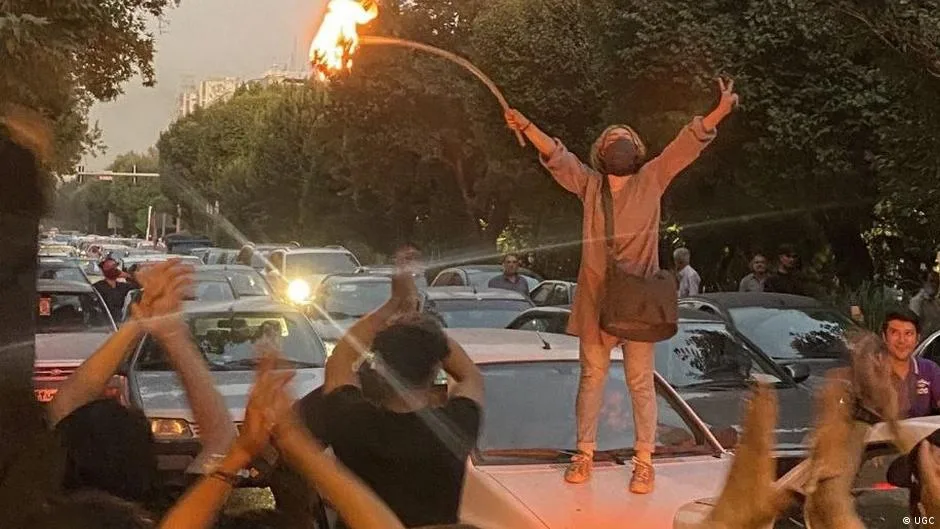
In an interview about the consequences of the "Women, Life, Freedom" movement, Pouran Nazemi states: "This movement created a significant socio-cultural change in Iran and brought many results. From the very beginning, this movement was formed with a specific demand: the abolition of mandatory hijab laws and the end of security confrontations with the people." She emphasizes that people believed in their power and collectively fought for freedom and justice.
Nazemi points out the presence of various segments of society, including the middle and affluent classes in this movement, adding: "The government could not limit the movement to economic protests and could not attribute these demands to a specific group. Even individuals from families loyal to the government were among the protesters."
She also refers to the media activities and numerous revelations during the Mahsa Amini movement, saying: "It was very important that the government could no longer prevent the publication of its crimes. Many victims and witnesses went abroad and documented the narratives."
Nazemi speaks of government efforts to reintroduce mandatory hijab in the streets and emphasizes that government supporters repeatedly issued statements and gathered, but they could not force the people to retreat. She mentions the propaganda efforts made to appropriate and misuse optional hijab for the promotion of the Islamic Republic.
A Difficult but Ongoing Path
In conclusion, Nazemi refers to the harsh conditions of the people in Iran and the severe restrictions on the flow of information and lack of media, stating: "We have never studied democracy, and despite the heavy costs, we have always continued to fight. In these trials and errors, we have gained important experiences." She recalls that the conditions of the people in Iran have always been a war, and despite the challenges, they continue on the path of fighting for freedom and justice.
Read more: Warning to Abbas Araqchi and Other Officials Regarding Recent Developments · Ansar Allah: Trump's Claims About the Attack on Saudi Oil Pipeline Are Baseless