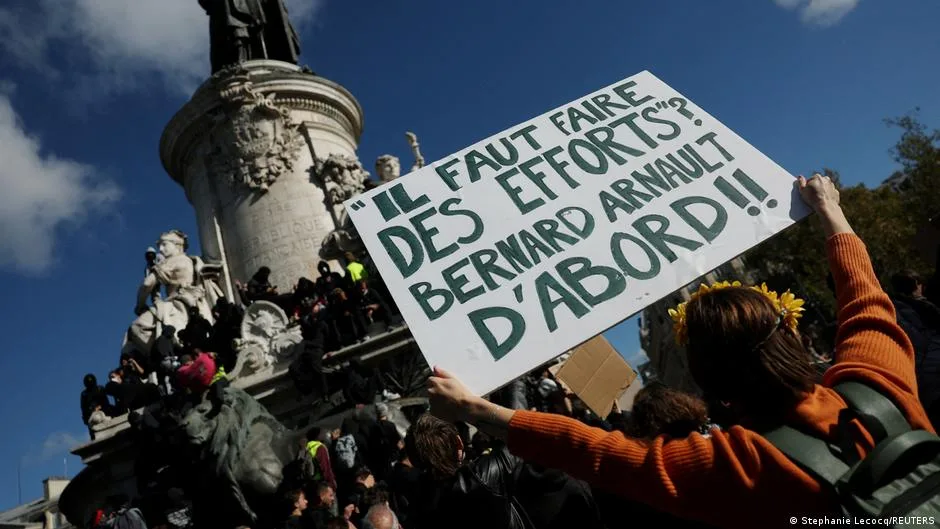
Nationwide protests in France on Saturday, October 17 (Mehr 25) turned violent, with alarming statistics including 150 police officers injured, an unknown number of protesters wounded, and 1,200 arrests reported. These unrests, which arose following demonstrations against high living costs, reduced public services, and educational system turmoil, have become a social crisis for France.
Prime Minister and the Horrific Dimensions of Violence
Édouard Philippe, the Prime Minister of France, condemned the horrific dimensions of the violence in response to these unrests. He stated that the police faced highly violent groups of radical leftists throughout the day. Philippe described these groups as organized and mysterious, having systematically attacked public property and republican institutions.
Damages and Widespread Unrest
Amid the unrest, protesters damaged public buildings and looted store goods. In the city of Limoges, rioters set fire to the town hall, which is listed as a protected historical site. Guillaume Guérin, the mayor of this city, expressed regret over the heinousness of this act and described the current state of the country as chaotic. However, while many protesters demonstrated peacefully, a large number were also injured during the unrest.
Gérald Darmanin, the French Minister of Justice, also reported on the severity of the unrest and called for a decisive judicial response to this violence. Emmanuel Macron, the President of France, threatened legal action against the perpetrators of these acts, stating that there is no place for violence in the French Republic.
Sparks of Unrest and Reasons for Protests
The spark for these protests dates back to student demonstrations last month in the suburbs of Paris. At that time, the protesters' anger over the lack of teachers and dilapidated schools quickly transformed into a broader movement against inequality and a demand for improved living conditions. On this day, protesters took to the streets in response to calls on social media to express their protests in memory of the movement
Read more: Migration of more than 10,000 graduates from Tehran University of Medical Sciences