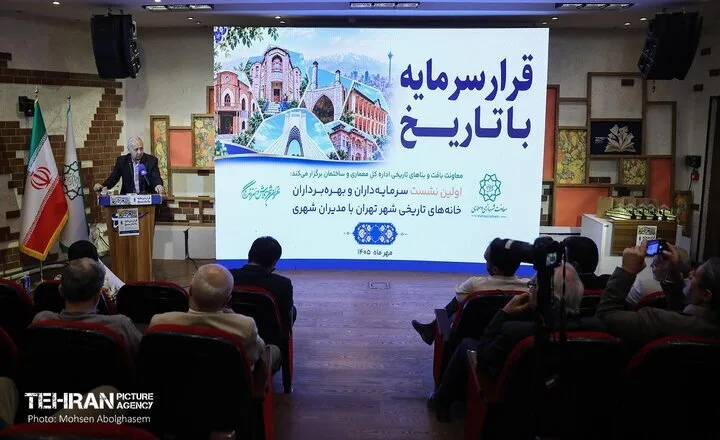
Nasrollah Abadian, the Deputy for Urban Planning and Architecture of Tehran Municipality, at the first meeting of investors and operators of historical houses with urban managers, examined the capacities of the historical fabric of the capital. This meeting, titled "Investment Meeting with History," aimed to enhance Tehran's status at the regional and global levels.
Attention to Historical Fabric for Tehran's Globalization
Abadian pointed out that the historical fabric of Tehran has not received sufficient attention so far, stating: "If we aim to transform Tehran into a global and regional city, paying attention to the historical fabric is one of the key issues that will help achieve this goal." He also announced important decisions being pursued to strengthen this fabric in the revision of Tehran's comprehensive and detailed plan.
Read more: Closure of 5 amusement parks in Tehran due to safety deficiencies
Approach to Reviving Historical Fabrics with Public Participation
The Deputy Mayor referred to the approach of Transfer of Development Rights (TDR) that has been approved by the Supreme Council of Urban Planning and Architecture, adding: "With this approach, individuals who preserve and restore their historical properties can utilize the capacity created in other parts of the city." He emphasized that reviving the historical fabric is not possible solely through managerial actions and must be carried out with public participation and their activism.
Abadian also announced the drafting of a historical fabric document for Tehran with a focus on clean transportation, stating: "Development based on public transportation must be considered in the revision of Tehran's comprehensive and detailed plan."
Development of Tourism and Cultural Infrastructures
He referred to joint planning with the Ministry of Cultural Heritage, Tourism and Handicrafts to create 85,000 accommodation units in Tehran, adding: "Tehran needs a museum complex at the national and international level."
Jafari, the Director General of Architecture and Building of Tehran Municipality, also emphasized the necessity of private sector participation in reviving the historical fabric, stating: "Without the presence of the private sector, investors, and cultural heritage activists, the development of this area will not be possible."
He also announced plans to draft an investment atlas in the field of valuable buildings, stating: "About 3,000 valuable buildings have been identified that have investment potential."
Focus on Historical Fabric in the Second Half of the Year
Referring to urban management plans for the second half of the year, Jafari said: "We will have a special focus on the historical fabric and the issue of historical buildings, and we will strive to create more opportunities for investors to participate."
Finally, Abadian noted that the necessary groundwork for implementing large-scale projects in historical fabrics has been laid, and he hopes that with these actions, we will witness positive changes in the historical fabric of Tehran in the future.
Read more: Medical Mission of Pezeshkian to New Iranian Ambassadors in 5 Countries · Alireza Zakani: Renovation of Tehran with New Patterns is on the Agenda