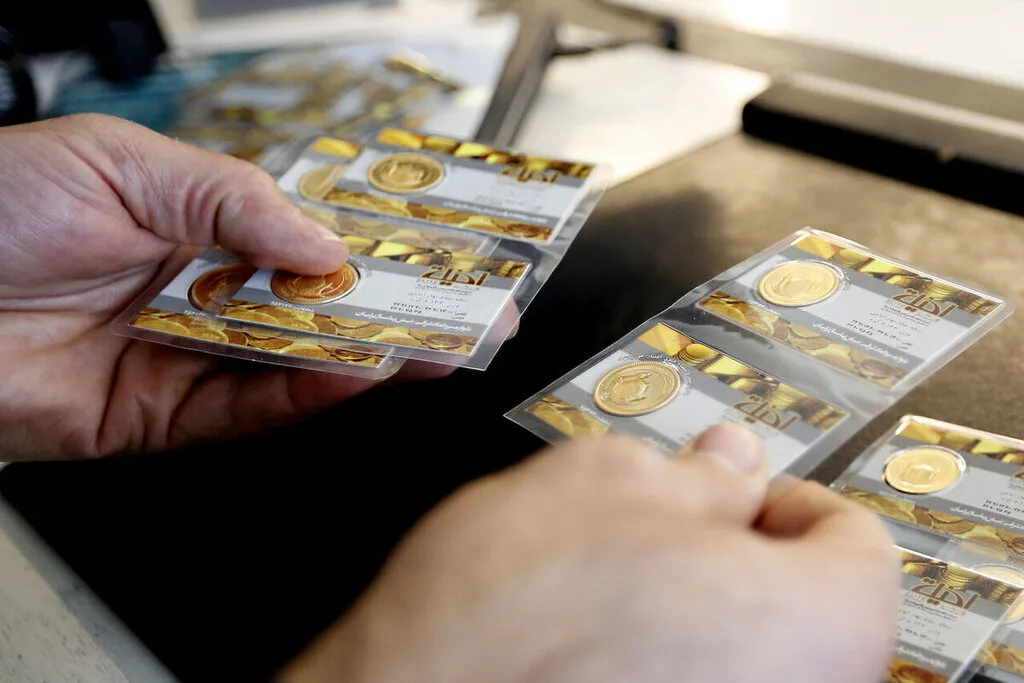
Nader Behdarafshan, the head of the Union of Gold and Jewelry Makers and Sellers in Tehran, explained the impact of the Central Bank's offering of coin papers on the gold and coin market, stating that the pricing of these papers was not such that it could have a significant downward effect on the market. The announced price for each coin paper was only about one to one and a half million tomans lower than the domestic market price.
Insignificant Impact of Coin Papers
Behdarafshan continued: "If the Central Bank had set the price of the papers several million tomans lower than the market rate, this tool could have played a more effective role in reducing prices. However, the determined price did not lead to a significant decrease in the market, and at one point, the market faced an increase of about 3 to 4 million tomans in the price of coins."
Read more: France with 348 Types of Taxes Holds the Record for Taxes in Europe
He also referred to the buyers' reception of the papers, stating that about 70 percent of the offered papers were of interest to buyers, but the high price of the papers prevented them from having a real impact on the free market.
The Necessity of Effective Currency Policy
Behdarafshan emphasized: "If the Central Bank is seeking to reduce gold and coin prices, it must strengthen its currency policies and have more management and control over the exchange rate. Additionally, the use of tools like coin papers should be done with more precise policy-making and management, and the price of these papers should have a meaningful difference from the market price."
He considered these measures more as temporary solutions and stated: "To create stability in the gold and coin market, one cannot rely solely on short-term policies, and it is necessary to develop a three to six-month program for the currency market and macroeconomics."
Behdarafshan added: "The Central Bank must have a program to create stability in the exchange rate over a specific period. Sanctions and war also affect the economic conditions, but with improved macro management of the Central Bank and economic policy-making, some of these pressures can be managed."
He also stressed the necessity of utilizing the opinions of market actors and said: "If guilds and economic actors are involved in decision-making and their specialized consultations are used, the Central Bank can play a more central role in managing the gold and currency market."
It is noteworthy that the Central Bank offered the futures of the full Bahar Azadi coins for the first time with a three-month maturity on September 9, 2023. Each paper was equivalent to one-thousandth of a full Bahar Azadi coin, and the issuance price of each paper was set at 235,700 tomans. On the day of the offering, about 42 million papers, equivalent to 42,000 coins, were purchased, and nearly 67 percent of these papers were bought by individuals and over 33 percent by gold investment funds.
Read more: Iran's Ambassador to Azerbaijan: Border Provinces are a Communication Line for Trade Development · NEOS Gold High Income ETF: A New Approach to Generating Income from Gold