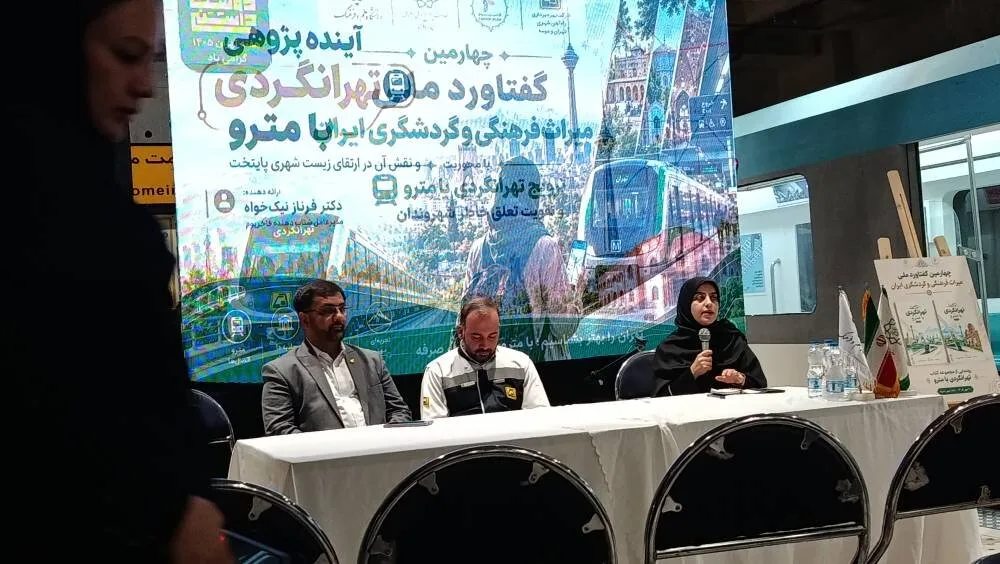
The Tehran Metro, with 7 lines and 163 stations, is gradually transforming into a cultural and social space. Mostafa Mousa-Pasandi, the Deputy for Cultural and Social Affairs of the Tehran Metro Operating Company, pointed out this capacity and the commencement of the construction of new lines 8, 9, 10, and 11, stating that the expansion of the metro network can help introduce the historical, cultural, artistic, and tourism attractions of the capital.
Changing the Approach to Cultural Activities in the Metro
Mousa-Pasandi explained that the perception of the metro in the past was primarily as a means of transportation, but over time, efforts have been made to create a space for cultural and social activities within this system. The first metro station was inaugurated in 2000, and since 2006, cultural houses have started operating in the metro.
Read more: Mehranfar: The Identity Crisis of Adolescents, a Fundamental Challenge in Iranian Children's Cinema
He continued that stations should not only serve a transportation function but also provide a venue for art and culture, which is why attention to Iranian-Islamic architecture in the new stations has increased. The Maryam Moqaddas and Takhti stations are successful examples of this approach.
Tourist Maps and Art Galleries
Mousa-Pasandi referred to the plan to install tourist maps in 24 metro stations and stated that the goal is to increase this number to 40. These maps are designed to introduce the historical and cultural attractions around the stations and can help facilitate easier access for citizens and tourists to these locations.
Currently, there are 44 art galleries active in 42 metro stations, and on average, about 10 exhibitions are held in these spaces each month. These programs provide an opportunity to showcase artists' works and familiarize passengers with artistic activities.
Introducing Museums and Cultural Centers
Mousa-Pasandi emphasized the importance of introducing cultural and tourism attractions in metro stations and mentioned the actions taken to promote the Museum of Iranian Art and the Book Garden. These efforts help passengers become acquainted with cultural and artistic locations and utilize the existing capacities.
He also referred to studying the experiences of metros in major cities around the world such as Moscow, Tokyo, Dubai, and London, stating that these studies can help better understand the capacities of the metro and plan for the expansion of cultural activities in the stations.
Reflection of Cultural Activities in the Virtual Space
Mousa-Pasandi noted the reflection of metro activities on social networks, saying: 100 to 150 pieces of content related to the metro and urban destinations are published daily. This communicative capacity of the metro can help introduce urban attractions and inform about cultural and artistic programs.
In conclusion, Mousa-Pasandi emphasized that the development of tourist maps, the operation of art galleries, and the introduction of cultural attractions, along with attention to Iranian-Islamic architecture in the new stations, can expand the role of the metro in urban life and utilize the capacity of this network to strengthen the culture and tourism of Tehran.
Read more: Babak Ansari: I am 6 years younger than my wife, Aram Jafari, and I am grateful · Amir Hossein Ghiasi and Ali Shadman Behind the Scenes of the Show 'Arash'