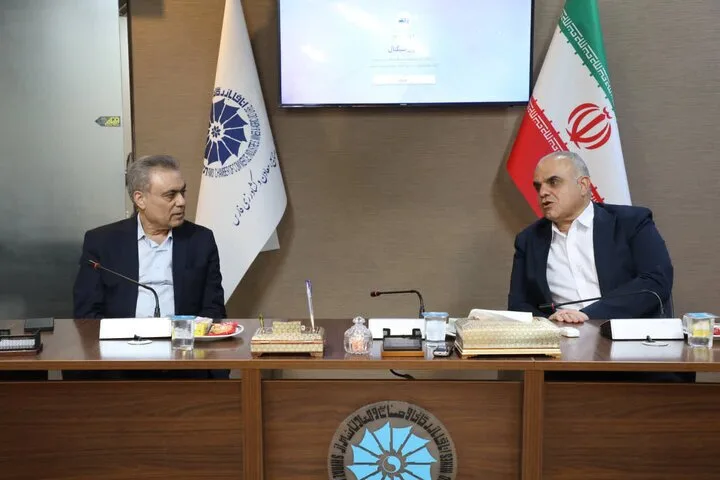
Mohammad Sadegh Hamidian, President of the Fars Chamber of Commerce, spoke about the consequences of currency policies on the economic behavior of private sector actors during a meeting with the CEO of one of the banks in Shiraz. He stated: "Economic policymaking achieves desirable results when there is coordination between legal requirements, market realities, and the economic motivations of actors; otherwise, the restrictions created can shift economic activities from official channels to unconventional methods."
Decrease in Motivation for Currency Return
Hamidian further referred to the situation of Iranians working in the Persian Gulf countries and said: "A significant number of Iranians are active in these countries, and it is natural for them to transfer part of their income back to the country; however, when currency policies impose restrictions and significant rate differences on the supply of currency in the official market, the motivation for returning currency through legal channels decreases."
Read more: Employees can reclaim their overpaid taxes
He also pointed out the direct effect of the difference between official and unofficial currency rates on the decision-making of economic actors and said: "One cannot expect individuals to supply their currency resources to the official market under conditions where there is a significant gap between the rates approved by policymakers and the rates available in the market. Such a situation can create an environment for resorting to unofficial intermediaries and strengthen flows outside economic oversight."
Economic Challenges and Consequences
Hamidian also referred to the difficulties of returning export earnings and the limitations on obtaining foreign currency banknotes. He added: "Even in cases where an economic actor attempts to bring currency through legal channels, sudden changes in regulations and decisions can disrupt their planning and activities." He emphasized that the entry of a significant volume of banknotes through legal channels requires addressing executive complexities and security requirements.
The President of the Fars Chamber of Commerce also stressed the instability in decision-making and the frequent changes in regulations, stating: "This increases the cost of economic activity and, instead of enhancing transparency, may expand the formation of unofficial networks; networks whose size, financial turnover, and economic impacts are not easily measurable and traceable."
Regarding the consequences of this situation on the economic structure of the province, he said: "When investments are concentrated in sectors like real estate instead of moving towards production and productive activities, the balance of investment across different sectors of the economy is disrupted. This trend can lead to an increase in land and property prices and a decrease in the attractiveness of investing in productive activities."
Hamidian emphasized the necessity of revising currency and banking policies, stating that these policies should be designed in a way that makes legal activity a logical and economic choice. He also highlighted the importance of enhancing the specialized knowledge of banking staff and updating operational processes, adding: "Effective interaction with the international banking network cannot be achieved merely by lifting external restrictions but requires structural reforms and professional capacity enhancement."
Read more: Sharifi Moghadam: Voucher sellers need money to buy goods again · Iran's increasing power in oil exports and reduction of sanctions