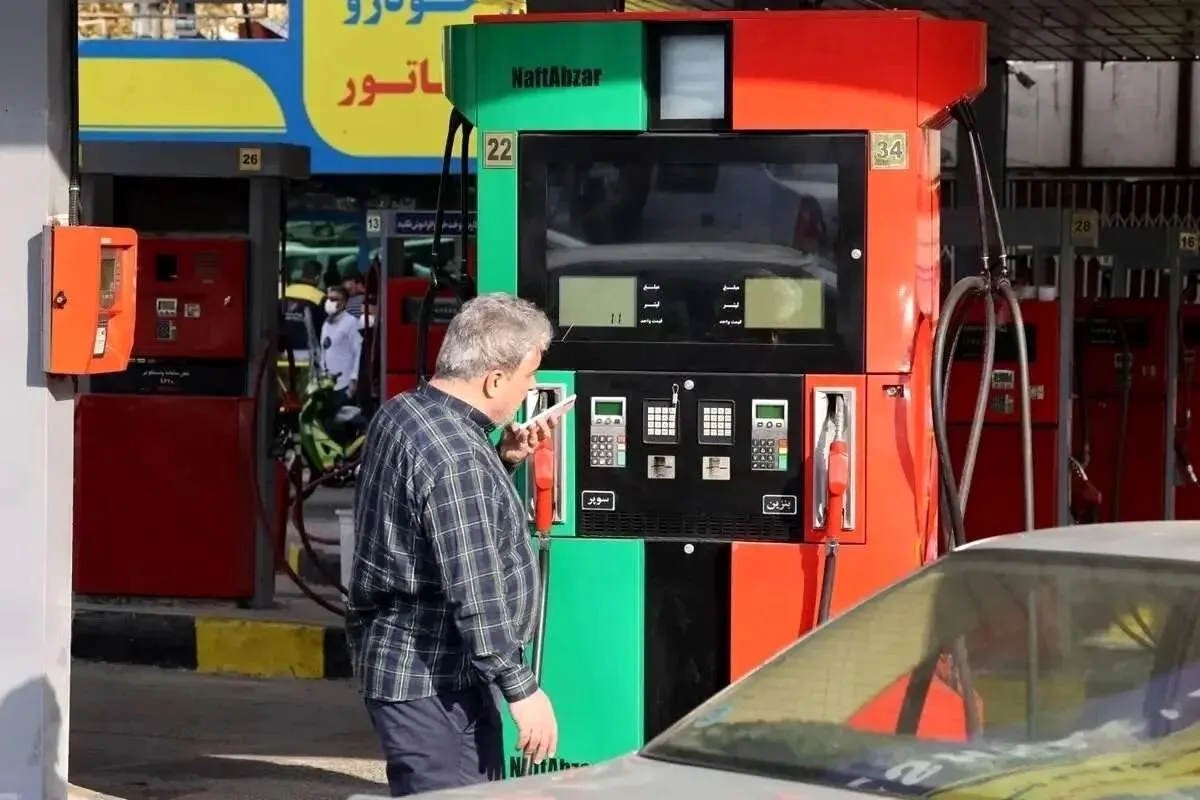
Mohammad Sadegh Azimi Far, the CEO of the National Iranian Oil Products Distribution Company, has launched the new plan for registering free fuel cards at fuel stations today. This plan, designed to control and reduce domestic fuel smuggling, allows individuals to receive fuel by verifying their identity through a bank card and national ID code.
Details of the Fuel Card Registration Plan
According to Azimi Far, with the registration of free fuel cards, the control of the card will be taken away from the station operator and given to the people themselves. This means that there will no longer be restrictions on the free fuel card at the station, and anyone who visits the station will first be verified. After this step, fuel will be provided according to consumption policies.
Read more: The price of each square meter of apartment in Tehran has reached 200 million tomans
Currently, several stations in Tehran are implementing this plan on a trial basis, and soon this plan is expected to be extended to other parts of the country. The main goal of this plan is to reduce domestic fuel smuggling and collect data related to household fuel consumption.
Challenges of Fuel Smuggling and Solutions of the New Plan
Although the volume of gasoline smuggling out of the country is very low due to its high flammability, fuel smuggling within the country has become a serious problem. Estimates indicate that about 4 to 5 million liters of gasoline are sold informally every day. This smuggling is particularly observed in some regions of the country where prices are high.
One of the reasons for this smuggling is the price difference between gasoline and similar industrial products like thinner. By implementing the fuel card registration plan, it is hoped that off-network gasoline consumption will be reduced to some extent, thus saving 2.5 million liters of gasoline per day.
People must go through the identity verification process when visiting fuel stations. After swiping the bank card, the national ID code of the account holder will also be verified, and this information can help aggregate fuel consumption data for each household. Additionally, this system is designed so that only with a one-time password, the use of station cards is enabled.
Ultimately, this plan aims to prevent the misuse of fuel cards, especially in cases where cards were used anonymously. With these changes, it is expected that the gasoline consumption situation in the country will improve and abuses will decrease.
Read more: Saudi Arabia has resumed oil loading from the port of Yanbu · Tehran Municipality has launched the "Zero Inflation" plan to stabilize commodity prices