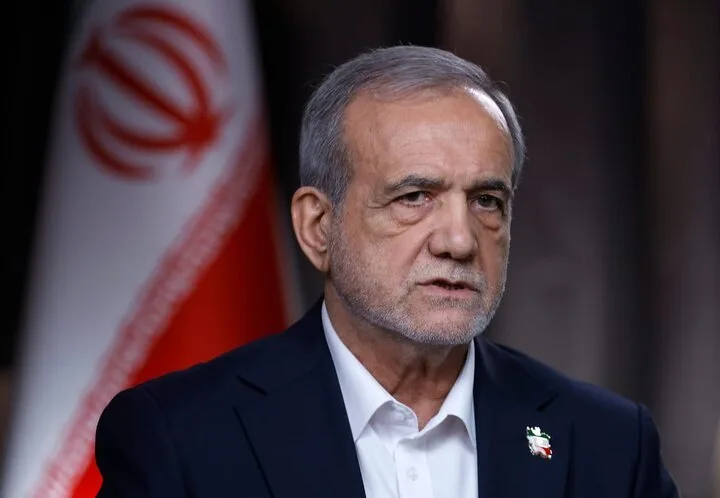
Massoud Pezeshkian, the President of Iran, in an interview with the CBS News program "Face the Nation," discussed the state of relations between Iran and the United States and mentioned the possibility of meeting with Donald Trump, the President of the United States, at the United Nations General Assembly. He pointed out the atmosphere of distrust between the two countries, emphasizing that to reach an agreement, it must be clear what topics both sides want to negotiate.
Atmosphere of Distrust and Challenges
Pezeshkian referred to the current conditions and said: "The United States has attacked Iran during negotiations," and this distrust is a significant barrier to establishing direct communications. He also mentioned the increase in sanctions and threats from the United States against Iran and questioned whether Washington would fulfill its commitments if negotiations took place.
Read more: 40,000 Motorcyclists' Drill 'Sacrificing for Iran' Emphasized National Security
Iran's Proposal to Reopen the Strait of Hormuz
The President of Iran stated that if the United States accepts Iran's latest proposal to reopen the Strait of Hormuz, Tehran will adhere to all its commitments. Pezeshkian, in response to a question about when the United States would respond to this proposal, expressed hope that if the response is positive, the implementation process would begin on the same day.
Pezeshkian also held the United States responsible for the collapse of a memorandum of understanding that had been signed in the summer, stating that if both sides act based on the framework of the initial agreement, they can adhere to their commitments. He continued by saying: "Iran is not seeking to build nuclear weapons, and developing such weapons is religiously forbidden," adding that even if some individuals in Iran wish to pursue the development of such weapons, they are not religiously permitted to follow this path.
Communication with the Supreme Leader and the Health Status of Ayatollah Khamenei
Pezeshkian, in another part of the interview, discussed his communication with Ayatollah Seyyed Mojtaba Khamenei, the Supreme Leader of the Islamic Republic of Iran, stating that he has no specific or ongoing health issues and has recently met with him twice, one of which lasted over seven hours.
He further referred to Ayatollah Khamenei's role in foreign policy, explaining that a team consisting of individuals from security institutions, members of parliament, and government agencies consults in the decision-making process, and these decisions are made through coordination among these individuals.
Managing the Country in Difficult Conditions
The program host, referring to the previous situation of Iranian officials and wartime conditions, asked Pezeshkian how the country was managed under those circumstances. Pezeshkian responded that Iranian officials have not been in shelters, and if such conditions existed, the country's affairs could not continue to operate.
This discussion comes as new developments are expected in Iran-U.S. relations and also in the area of regional security. The beginning of the process to reopen the Strait of Hormuz, as a key route for shipping and global trade, could have profound impacts on the regional economy and international relations.
Read more: Ebrahim Raisi: Iran Has Not Started and Will Not Start a War · Iran Ranked 116th in the Legatum Prosperity Index; A Gap Between Capacities and Realities