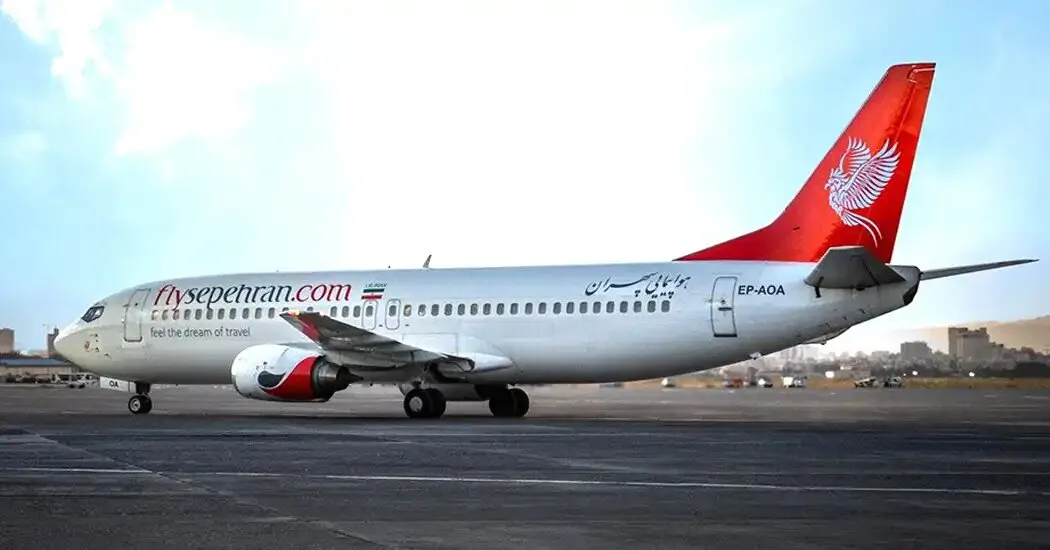
The Mashhad-Kermanshah flight, belonging to Sepahan Airlines, encountered a disturbing incident on September 15. This flight, after taking off from Hashemi Nejad Airport in Mashhad, was forced to declare an emergency and return to the airport due to a technical fault in the engine.
Flight Status Report and Return to Ground
Hasan Jafari, the public relations manager of Hashemi Nejad Airport, announced that the aircraft landed safely in Mashhad and all passengers disembarked unharmed. He also noted that the Mashhad to Kermanshah flight had been canceled twice due to technical faults and faced engine issues again on the third attempt. Ultimately, on the fourth attempt and with a plane change, passengers arrived safely at their destination.
Read more: Iran's Foreign Ministry's official protest against the refusal to issue a visa for entry to Vienna
However, the exact cause of this incident is still unclear and requires specialized investigations by the Civil Aviation Organization. Jafari also added that after landing, airport teams were deployed to inspect the runway and search for possible tire debris.
Recurrent Incidents and Safety Questions
This incident occurred just a few weeks after a Sepahan Boeing 737 also went off the runway at Mashhad Airport. In that event, passengers and crew were unharmed, and the matter was referred to the responsible authorities for investigation. According to the final report from the Civil Aviation Organization, the Boeing 737-300 incident was due to an unusual shimmy in the landing gear, which led to component failures and tire damage.
The recurrence of these two incidents within a short timeframe raises serious questions about safety oversight on Sepahan's fleet. Has there been an extraordinary inspection of Sepahan's fleet following the incident on September 3? Or have inspections undergone a transformation in safety approaches?
These questions are particularly significant, especially since damage to the tires of this airline's aircraft has been previously noted. In the past, discussions have arisen regarding the potential connection between tire issues and the condition of the airport runway, but in many cases, the problem has been attributed to the tires themselves.
Sepahan has blamed the services and infrastructure of Shahid Hashemi Nejad Airport in Mashhad for these two incidents. Currently, the main demand from passengers and oversight bodies is to clarify the results of safety inspections. Do the recent events indicate a recurring problem in the maintenance and components of Sepahan's fleet, or are these two incidents independent technical issues that were well managed?
Read more: Amirkabir University of Technology focuses on attracting talented students from neighboring countries · New US Treasury sanctions; Iran's air isolation reaches its peak