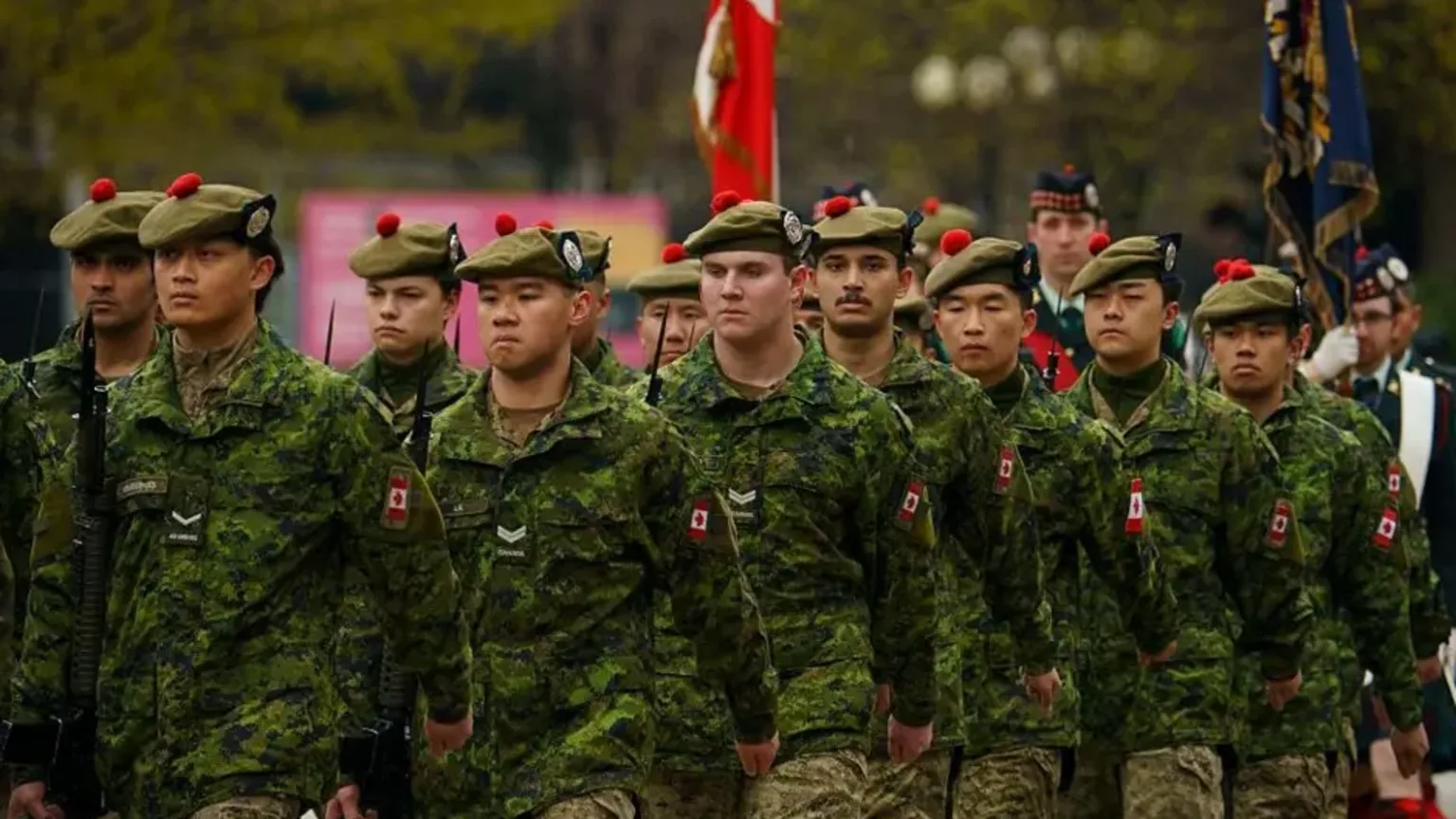
Mark Carney, the Prime Minister of Canada, acknowledged last week that he has prepared for a scenario that until recently seemed difficult to imagine: a U.S. attack on Canada. He emphasized that the risk of such an event is low and the likelihood of it occurring is very minimal, pointing to the changing relations between the two countries and considering it his duty to account for all possible scenarios.
History of Tensions and Concerns
The imposition of extensive tariffs by Donald Trump and his insistence on making Canada the fifty-first state of the U.S. have compelled Canada to examine the scenario of a U.S. military attack through drills and strategic simulations. Recent polls show that over 30% of Canadians believe a U.S. military attack on their country is likely. Lieutenant General Christopher Coates, a former officer of the Royal Canadian Air Force, notes that while there are defense collaborations between the two countries, the probability of such an attack is very low.
Defense Collaborations and Possible Scenarios
Canada and the U.S. collaborate in many areas of military defense and both countries are members of the North Atlantic Defense Pact. Coates believes that if an attack were to occur, it would likely begin with more covert methods such as cyber warfare. After World War II, Canada and the U.S. became natural allies, and the economies, military structures, and cultures of the two countries became deeply intertwined.
However, the history of relations between the two countries has not always been positive. Researchers believe that the fear of the United States is one of the foundations of Canada's formation as a political entity. At various times, Canada has prepared to counter military threats from the U.S. Andrew Birch, a researcher at the Canadian War Museum, states that even if the occurrence of war seems unlikely, military forces are always ready to face any type of threat.
Matthew Schmidt, an associate professor of national security at the University of New Haven, believes that Canadians' preparedness reflects fundamental changes in the global order. He points out that Canadian leaders need to carefully consider the extent of their cooperation with the U.S. military and its implications. This situation could damage relations between the two countries and create fears and concerns among Canadians.
If an attack occurs, the initial phase of the war may be very short. According to a model used by the Canadian military, the strategic positions of the country will not withstand the invading forces within a week. In such a scenario, Canada may seek assistance from allied countries like France and the UK.
Read more: The U.S. Again Rejected Saudi Arabia's Request to Join Operations Against Yemen · The Prime Minister of Lebanon Emphasized Opening Relations with Iran