The management of Tehran's boundary was addressed in the second brainstorming session focused on "Revisiting the Relationship between Villages and the City Boundary," discussing the challenges of population growth and land use change in agricultural areas. This session was held with the presence of urban managers, experts, and scholars in the field of city and village at the Tehran Municipality.
Population and Environmental Challenges
Mahdi Mazinani, the director general of Tehran's city boundary, referred to the population growth trend in the villages located within the capital's boundary and stated: "The increase in population in these settlements, without a specific plan for infrastructure provision and controlling spatial development, can have widespread consequences for the environment, agricultural lands, and the spatial structure of Tehran's boundary."
Read more: Afshin congratulated National Scholars' Day to Iranian scientists and researchers
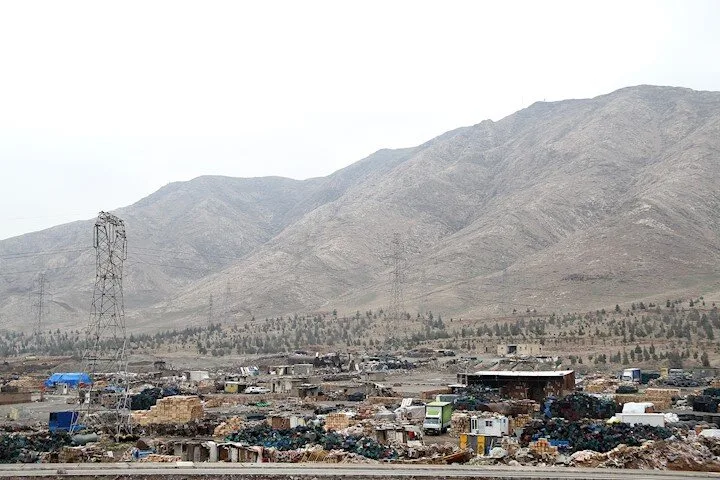
He further pointed out three fundamental issues: the gradual conversion of agricultural lands to residential use, the formation of unstable densities, and the expansion of chaotic construction. Mazinani also mentioned the annexation of surrounding lands to the village fabric as one of the important issues in boundary management and added: "The gradual development of village boundaries through land annexation, without clear regulations and plans, can lead to scattered construction and increased population."
Past Experiences and the Necessity of Planning
During this session, experiences from areas such as Hasanabad, Qiamdasht, and Qaleh Now were reviewed. These areas demonstrate that spatial expansion and population growth can alter the structure of small and traditional villages, turning them into new population centers around the capital. Participants in this session emphasized that the continuation of unregulated development around villages, without anticipating management and infrastructural mechanisms, increases the likelihood of a new wave of urban settlements forming within Tehran's boundary.
Talashi, a researcher and faculty member at the university, also stressed the necessity of considering the economic and environmental functions of boundary villages and said: "The main issue arises when the productive and agricultural functions of villages are affected by the increasing demand for settlement and spatial development."
In this regard, Engineer Khoyeni, the technical director of the Islamic Revolution Housing Foundation, also emphasized the necessity of clarifying the management mechanisms for these areas and stated: "Ambiguity in responsibilities and the multiplicity of decision-making authorities can create grounds for land use change and unbalanced development."
Overall, participants in this session emphasized that the preservation of Tehran's boundary cannot be achieved solely through construction control, and simultaneous management of population, land use, infrastructure, environment, and the future of rural settlements must be prioritized.
Read more: The rebirth of harmony in Shahr-e Rey · 30% reduction in Tehran traffic in October