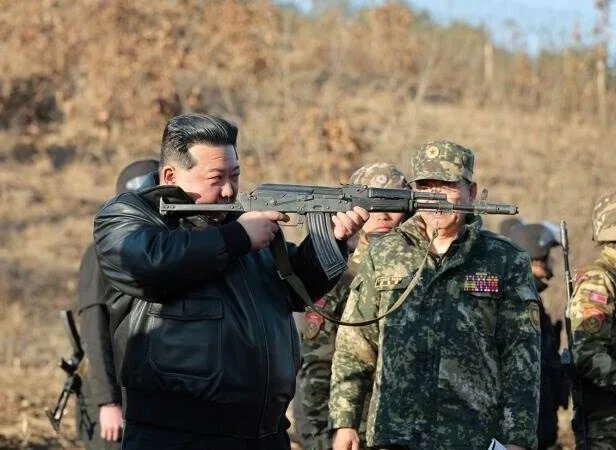
Kim Jong Un, the leader of North Korea, in his recent meeting with participants of the third meeting of the commanders of the Korean People's Army, emphasized the necessity of maintaining the army's permanent readiness for war. He introduced continuous and intensive military exercises as the only practical solution to achieve this goal.
Emphasis on Loyalty and Combat Capability
In this meeting held on October 27, Kim Jong Un noted that the first revolutionary duty of the commanders is to enhance the complete readiness of the units for war. He stated that commanders must demonstrate their loyalty to the party, homeland, and people through practical achievements in training their commanded units. This readiness should be such that they can enter the battlefield with the approach of 'one against a hundred.'
The Importance of Commanders' Role and Army Development
Kim Jong Un also emphasized the importance of the role of the commanders in strengthening the country's armed forces and expressed confidence that their efforts could accelerate the development of the army. These remarks come at a time when North Korea has expanded its nuclear and missile programs alongside the development of conventional military capabilities in recent years. Pyongyang has repeatedly emphasized the necessity of enhancing the combat readiness of the armed forces and considers nuclear weapons as part of its deterrence strategy against external threats.
According to published reports, North Korea has focused on developing nuclear warheads and ballistic missiles, including intercontinental missiles, in recent years. Kim Jong Un has also repeatedly emphasized strengthening the combat capabilities of the army and increasing the readiness of military units, calling for continuous and intensive military exercises. This approach reflects North Korea's firm determination to maintain its military power and national security against external threats.
Read more: Saudi airstrikes on Yemen; 11 attacks in Omran and Taiz · The Executive Deputy of the Army praised the naming of Tehran streets after martyrs