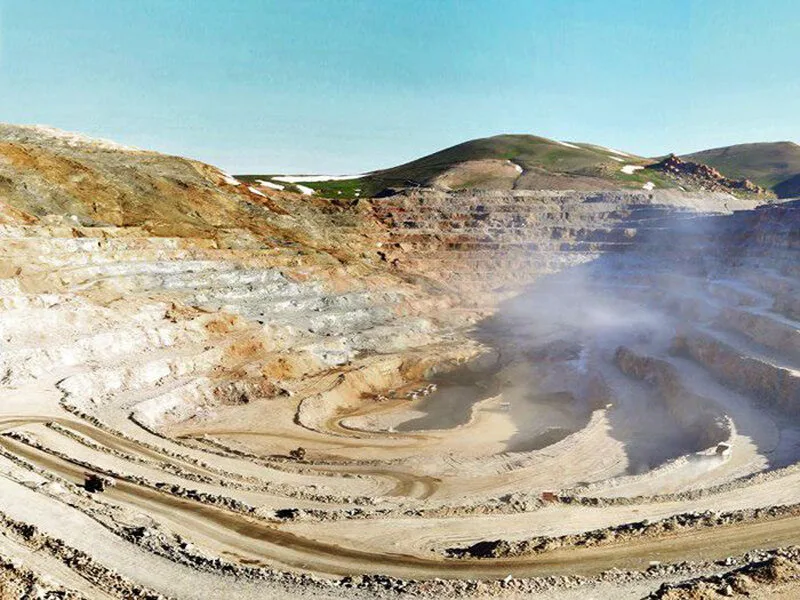
Kerman province, with over three billion and 122 million tons of exploratory copper reserves, is recognized as the most copper-rich province in the country, holding 93 percent of the total reserves. This province firmly maintains its top position, while 21 out of the 31 provinces in the country have no recorded copper reserves.
The Importance of Copper in the Global Economy
Copper is considered a strategic metal in today's global economy. This metal has gained special importance due to its fundamental role in driving industries such as automotive, electrical infrastructure, and renewable energy. The increasing demand in international markets has compelled mining countries to accelerate exploratory operations and develop capacities, and Iran, due to its significant reserves, can play a more prominent role in this market.
Read more: Increase in gold and coin prices on October 1; the dollar approaches a new channel
Growth of Exploratory Reserves and Its Challenges
Recent statistics from the Ministry of Industry, Mine and Trade indicate that the total confirmed exploratory reserves of copper ore in the country will exceed three billion and 340 million tons by the year 1404, marking a 112 percent growth compared to 1403. This growth amounts to one billion and 768 million tons, indicating the country's high potential in the copper sector.
A noteworthy point in this data is the severe geographical concentration of the country's copper reserves; among the 31 provinces, only 10 have confirmed recorded reserves, while 21 provinces have no credible reserves in this regard. This high concentration, while providing economies of scale and cost savings in exploration and infrastructure development for the main hub, Kerman, also highlights the risk of concentrating the country's copper production capacity in a single mining area.
New Opportunities in Other Provinces
On the other hand, significant growth in reserves in provinces like Sistan and Baluchestan and South Khorasan indicates that new exploratory capacities are emerging and could increase the share of other provinces in the country's copper reserves in the coming years. However, converting these reserves into actual production capacity requires investment in mining infrastructure, processing, and transportation to turn exploratory potential into economic added value.
Read more: Pezeshkian: I promise to pave the way for improving people's livelihoods · Consequences of war and rising diesel prices on the U.S. economy