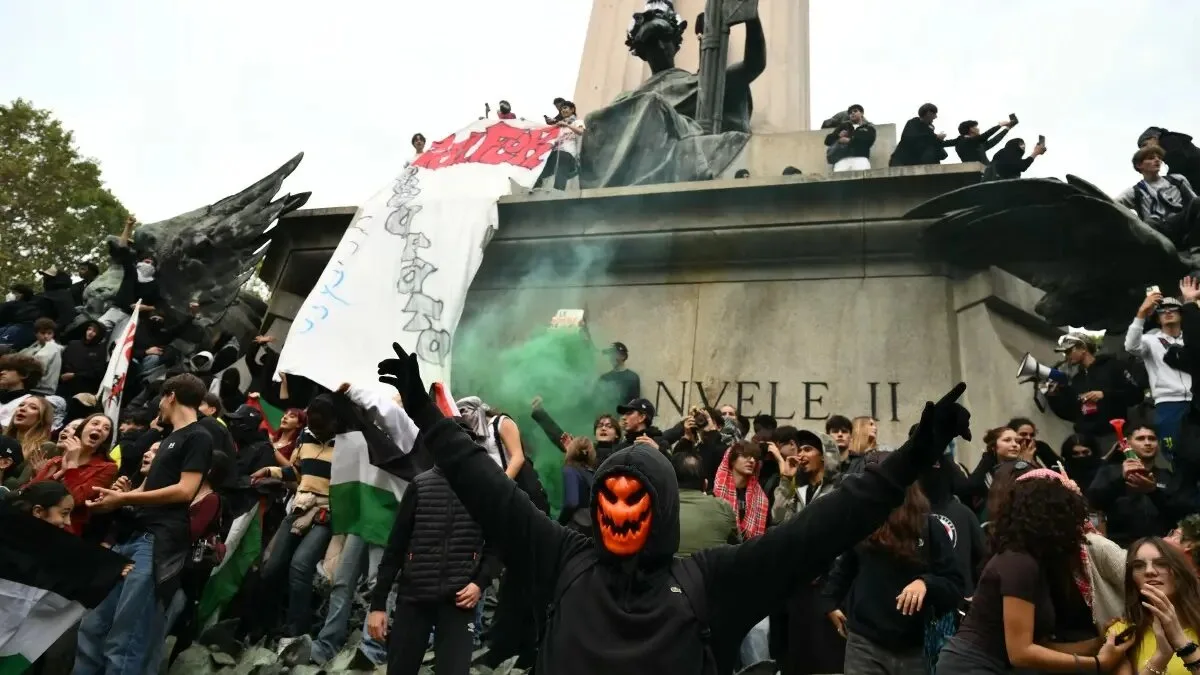
The protests of Italian students, titled "A Day Without Meloni," reached their peak in response to educational policies and rising tuition costs. These protests, occurring simultaneously with similar unrest in France, reflect the deep dissatisfaction of the younger generation with the educational and social situation.
Destruction and Tension in Turin
In recent days, the city of Turin has become a site for tense protests. Students in this city gathered in the streets, demanding changes in educational policies and a reduction in tuition costs. These protests quickly escalated into violence, resulting in the destruction of schools and the injury of a teacher and a police officer. Additionally, during these clashes, a 17-year-old teenager was arrested by the police for unspecified reasons.
Read more: Expansion of restrictive measures against the Zionist regime in 62 countries
Social and Cultural Consequences
These protests are interpreted not only as a reaction to educational policies but also as an expression of public dissatisfaction regarding the social and economic situation in Italy. Italian youth, facing economic and social challenges, clearly demonstrate that they can no longer simply overlook the problems.
Alongside these grievances, some analysts believe that this type of protest could evolve into a larger national movement. The younger generation of Italy, heavily impacted by economic and social crises, is now seeking fundamental changes in the educational and social system.
Ultimately, these protests and the developments surrounding them highlight a fundamental need for dialogue and interaction between officials and the youth. Will Italy's educational and political authorities listen to and respond to the voices of the youth?
Read more: Trump withdrew from economic sanctions against Russia · The French government acts towards protesting students like domestic enemies