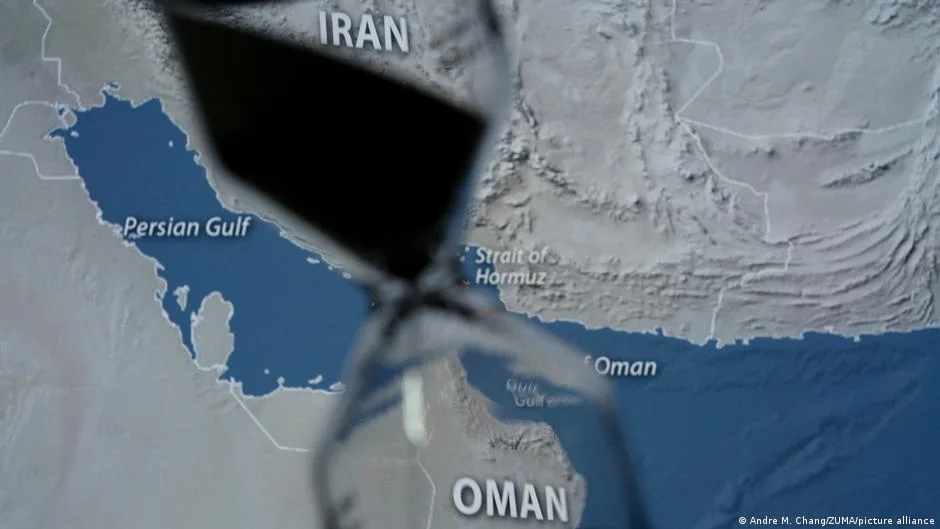
The Strait of Hormuz, which has become one of the main focal points of military confrontation between Iran and the United States in recent months, is now facing a new and different threat. Following attacks on commercial ships and disruptions in maritime routes, officials of the Islamic Republic are talking about the possibility of targeting communication infrastructure in the Persian Gulf.
Hosseini Mohibi's Warning About Communication Cables
Hosseini Mohibi, spokesperson for the IRGC, on Monday, October 19, emphasized the importance of this route for information transfer and commercial activities, referring to the passage of seven major communication cables through the Strait of Hormuz, and further warned: "New targets will be unveiled. New weapons will be unveiled."
Read more: Gharibabadi: Coordination in International Decision-Making is Essential
Although Mohibi did not directly mention the IRGC's decision to destroy the cables, the reference to this infrastructure alongside military threats raised the possibility of the conflict extending to the region's communication network. On November 1, an international media outlet reported, citing two senior Iranian security officials, that Tehran has prepared plans for a possible attack on submarine cables.
Economic and Security Consequences of Damage to Cables
According to statistics from the International Telecommunication Union, over 99 percent of international data traffic is transmitted through submarine cables. This dependency has made the security of these infrastructures a significant issue for banks, technology companies, governments, and the global economy. However, Alan Moldin, director of research at TeleGeography, has estimated that less than one percent of the world's international bandwidth passes through the Strait of Hormuz.
Mehdi Sarami Far, a technology journalist, in discussions with experts, has estimated that while damage to submarine cables is technically possible, the actual extent of the damage differs from the picture that officials of the Islamic Republic present regarding the global consequences of such an action.
Hosseini Razagh, a political activist, emphasizes that the threats from the Islamic Republic should not be regarded merely as propaganda, and in the event of an escalation of war, the possibility of such threats being carried out cannot be overlooked. He warns that attacks on the vital infrastructure of neighboring countries could have repercussions beyond wartime.
Read more: Seyed Abbas Araghchi: Sustainable Security Depends on Collective Responsibility · Knife Attack on the Guard of the Israeli Embassy in Belgrade