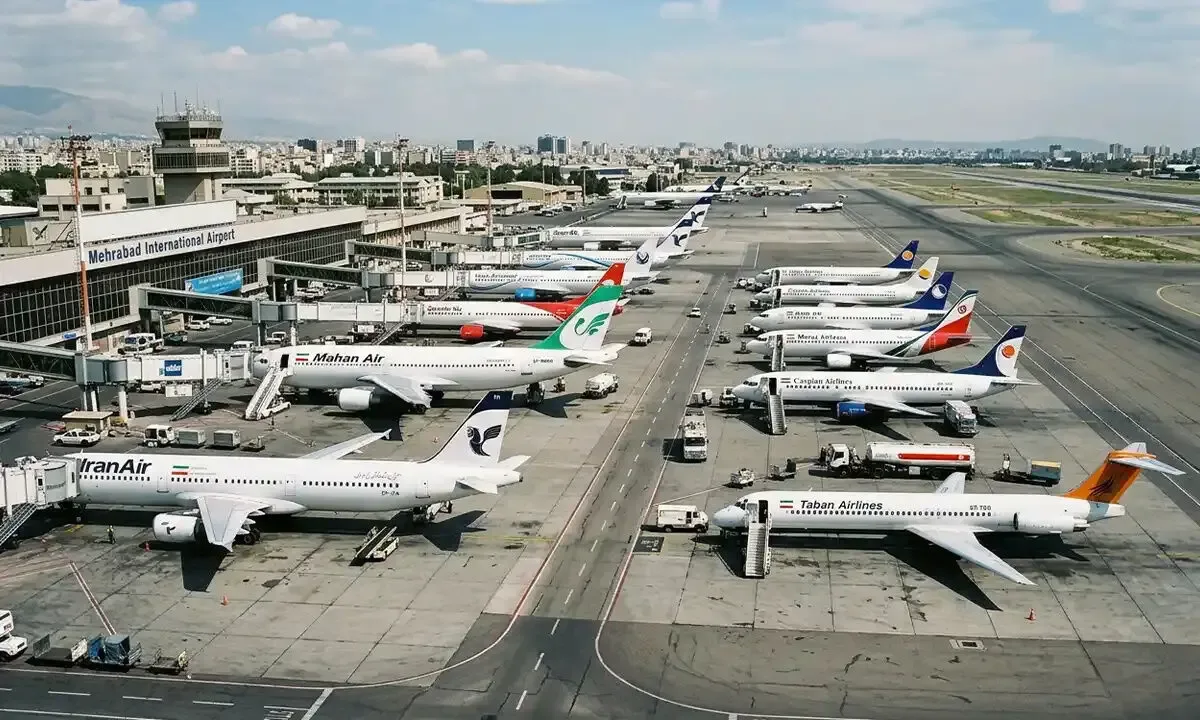
The air blockade of Iran began with the sanctions against airlines by the U.S. government, and this action has quickly impacted the country's trade and tourism relations. Azerbaijan, the UAE, Georgia, Turkmenistan, and Oman have cut off their air services to Iranian companies. While some of these countries are more tourism-oriented, countries like Iraq, Turkey, and the UAE have vital trade and economic connections with Iran.
Economic and Trade Impacts of the Restrictions
The air restrictions particularly have a direct impact on the trade of medicines, medical equipment, foodstuffs, and consumer goods. According to economic officials, given the perishable nature of some goods and the need for their immediate shipment, air travel is crucial for maintaining the supply chain. Medicines and medical equipment are recognized as the most sensitive goods, where any delay in their transport could endanger patients' lives.
Read more: Hosseini Rahmanian announced new changes in the remote working method of government employees
Additionally, items such as laptops, mobile phones, and specific chemicals are imported via air routes due to price fluctuations and the need for quick delivery. In this regard, Mojtaba Bakhipour, a member of the Parliament's Civil Commission, stated that the full impact of the air blockade has not yet been assessed, and a meeting will be held to review this issue.
Possible Alternatives and Relations with Neighbors
Hamid Hosseini, a member of the Iran-Iraq Chamber of Commerce, referred to Iran's efforts to find suitable alternatives for the sanctioned companies. He stated that companies can be found at Najaf Airport that provide necessary services without fear of sanctions. This could help maintain trade relations.
Hosseini also pointed to the mutual dependence of Iran and Iraq, saying: "Certainly, Iraq is dependent on us in many areas. The gas and electricity of this country are supplied by Iran, and Iraq's crude oil exports must also pass through the Strait of Hormuz." This dependence, he noted, means that Iraq will also suffer from the flight cancellations.
On the other hand, Mohammad Sharif Malekzadeh, the former head of Iran's Cultural Heritage and Tourism Organization, criticized the state of the country's tourism industry, stating: "Iran's tourism is currently facing serious disruptions in access and uncertainty, but it cannot be said that all tourism in the country has come to a halt." He emphasized hope for improvement, pointing to the continuation of some flights and the activity of individuals in this field.
Ultimately, given the current conditions and increasing pressures, Iran's efforts to maintain economic and trade arteries continue vigorously, and hope for managing these challenges remains alive in the hearts of officials and trade activists.
Read more: The Iraqi government signed a new agreement for importing dollar banknotes into the country · Pezehkiyan: A 6-member team has decision-making authority in Iran