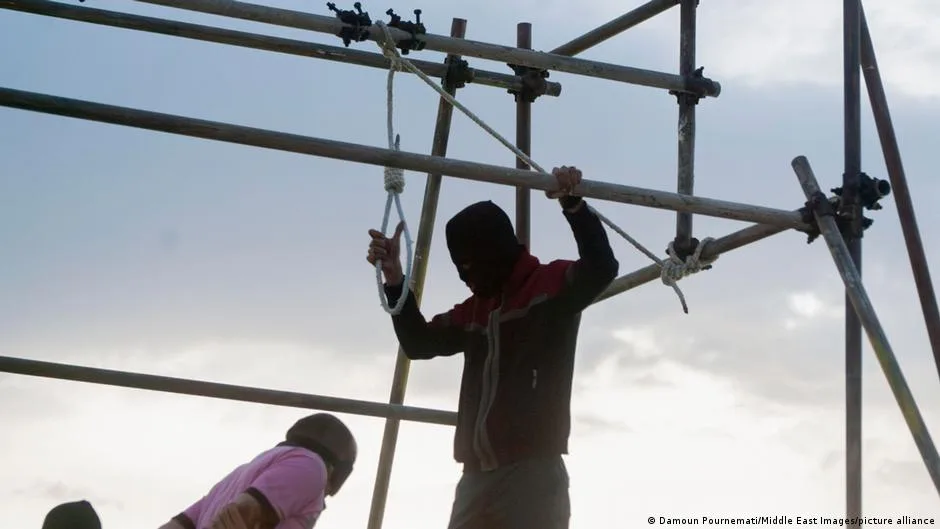
The Iranian society is facing deep social and legal challenges in a situation where executions are considered a tool for ensuring security and justice. Recent statistics show that over 2,000 people have been executed in Iran in the past year, raising global concerns about human rights.
The Conflict Between the Sense of Security and the Right to Life
This issue raises fundamental questions: Can society experience security and justice without the death penalty? Is it possible to prepare for the abolition of the death penalty in a country with a history of violence? Oral Hatami, a sociologist, and Sina Yousefi, a lawyer, have discussed these issues in interviews.
Read more: Opening of the National Apple Festival in Shirvan and unveiling important projects in North Khorasan
The experience of countries like France shows that the abolition of the death penalty can occur even without majority public support. In France, in 1981, when the death penalty was abolished, 62% of the people wanted to keep it. However, the government passed this law relying on human rights principles. Sina Yousefi points out that lawmakers can act even before social consensus is formed, but these reforms require social and cultural support.
Existing Concerns and Challenges
Oral Hatami notes that without reforms in the judicial system and public education, society may resist the abolition of the death penalty. Additionally, in a situation where there is a sense of insecurity and distrust in judicial institutions, severe punishments may remain the only conceivable solution.
Given that the death penalty is considered the primary response to serious crimes in Iran, there is a need for a change in attitudes and social values. Many people still view the death penalty as a tool for seeking justice. However, the reality is that distrust in judicial institutions and the lack of supportive mechanisms for victims also exacerbate this issue.
For this reason, legal reforms must be accompanied by social and cultural measures to create real and lasting changes in society. These challenges indicate that Iranian society is at a critical crossroads that requires deeper thought and dialogue.
Read more: Alamolhoda: America is trapped in a war with Iran · The Trump administration imposed sanctions against the International Criminal Court