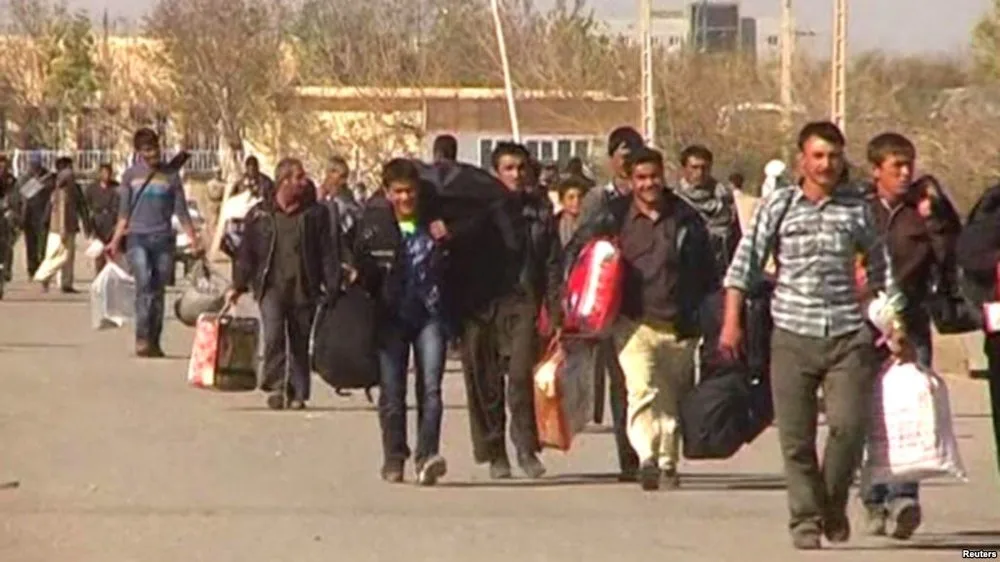
Iran, in a serious move, has expelled 500,000 Afghan migrants from its territory and returned them to Afghanistan this year. This information was published today, Friday, October 9, by the United Nations, emphasizing the humanitarian dimensions of this issue. In other words, this number of migrants is equivalent to emptying the entire city of Arak of its population.
Number of Migrants and Its Background
Last year, Iranian officials announced that 1.8 million Afghans had left this country, indicating the social and economic pressures in Iran. Nevertheless, Iranian officials continue to emphasize that there are about one million other illegal migrants in the country who need to return to their homeland.
Legal Status of Migrants and Its Consequences
The United Nations has pointed out in its reports that 88 percent of those expelled from Iran this year had entered the country illegally. This highlights the social and economic challenges in Iran that have forced many Afghans to migrate to this country. Additionally, the Taliban had previously announced that land would be allocated for housing to returning migrants from Iran, and basic facilities for their living would be provided.
The return of such a large number of migrants to Afghanistan will have significant social and economic consequences. This situation requires careful planning and international support to help migrants restart their lives in their homeland.
Currently, the return of this number of migrants to Afghanistan will not only have economic impacts on both countries but will also affect the social and cultural situation in Afghanistan. These migrants will face many challenges, including finding jobs and securing livelihoods, and will need government and international support.