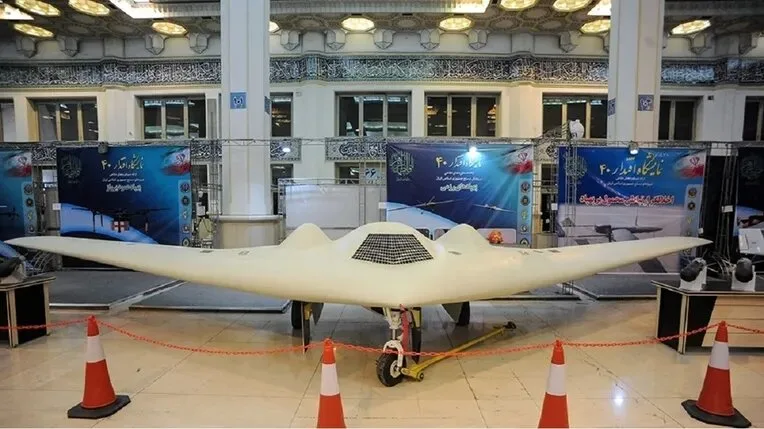
The Navy of the Islamic Revolutionary Guard Corps of Iran recently announced that it successfully controlled an American unmanned submarine of the "Remus 600" type in the Strait of Hormuz. This news has drawn attention to Iran's history of acquiring military technologies and using them to develop indigenous equipment. In recent years, Iran has sought to enhance its military capabilities by reverse engineering and utilizing existing technologies from Western weapons, thereby reducing its dependence on other countries.
History of Iran's Military Technologies
Over the years, especially after the imposed war, Iran has been pursuing the strengthening of its military capabilities. The issue of reverse engineering Western weapons and technologies has become one of Iran's main strategies. The country has attempted to produce advanced indigenous models of weapons using equipment and technologies obtained from other countries. In this regard, Iran has succeeded in producing unmanned aerial vehicles, ballistic missiles, and even warships.
Read more: Amir Ali Abolfath: Sanctions are Ineffective Tools Against Iran
Applications of New Weapons
The control of the "Remus 600" submarine demonstrates Iran's intelligent use of advanced technologies. This submarine can be utilized in various conditions as a tool for information gathering and conducting military operations. Given Iran's geographical position and access to open waters, the use of submarines can provide significant strategic advantages for the country. Furthermore, Iran's ability to control and utilize such equipment is seen as a strong message to regional and international rivals.
Iran is also striving to achieve the most advanced military technologies by expanding its research and development programs. The country is particularly focused on improving and enhancing its capabilities in the aerial and naval domains. In this context, collaboration with scientific institutions and universities is prioritized.
Security and Political Implications
These developments have also raised concerns among Western and regional countries. The advancement of military technologies in Iran could lead to a shift in the balance of power in the region, which is why countries like the United States and the Israeli regime are closely monitoring Iran's movements. In this situation, diplomacy and political interactions, especially in the area of security, can play an important role in reducing tensions.
Recent developments indicate that Iran, despite sanctions and international pressures, is seeking self-sufficiency in the military domain, and it seems that we will soon witness further advancements in this area. The country is courageously and proactively striving not only to enhance its capabilities but also to be recognized as a key player in regional security.
Read more: Emergency forces on standby in six provinces for rainfall · Noorollah Moradi: Art can make Iran's image last in the world