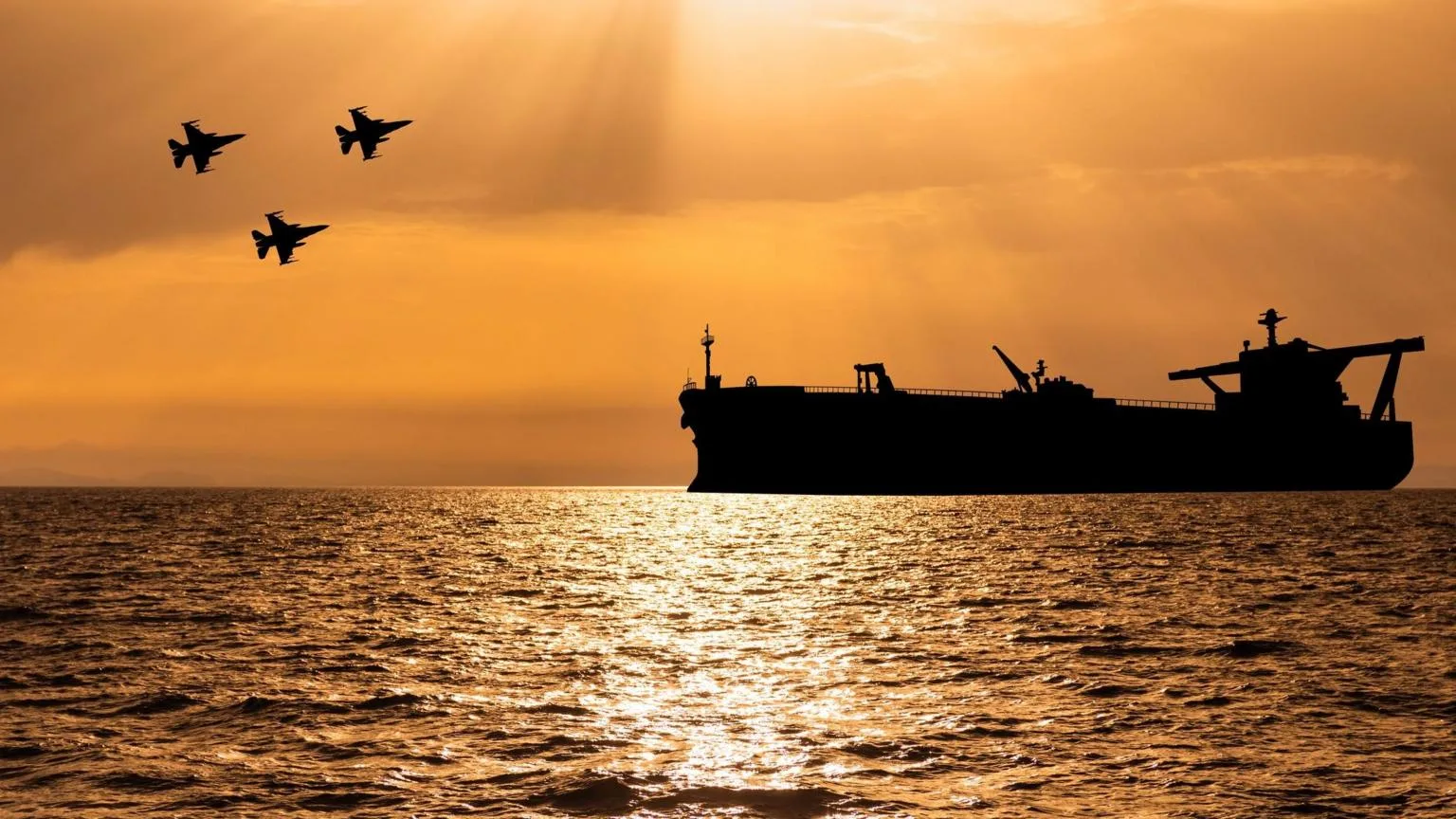
In recent weeks, Gulf Arab countries have managed to restore their oil exports to pre-war levels by increasing the passage of oil tankers and utilizing more alternative routes. In this situation, Iran's exports have dropped to nearly zero due to the ongoing maritime blockade by the United States.
Developments in the Strait of Hormuz
This development occurs as Tehran has been attempting since the beginning of the recent war to use threats to shipping in the Strait of Hormuz as one of its main leverage points to enhance its bargaining power against the United States. Currently, with the increase in exports from neighboring countries, the threat from Iranian officials that halting Iran's crude oil exports would also impede others seems to have lost its effectiveness.
According to a report from the Kepler tracking institute, from September 1 to 28, at least 16.5 million barrels of crude oil and condensates have been exported from the region daily, which matches the pre-war average, excluding Iran's oil. About 9.9 million barrels, equivalent to 60 percent of this volume, passed through the Strait of Hormuz, while the remainder was transported to global markets via other routes.
Challenges for Iran and U.S. Influence
Kepler has estimated that Iran's oil passage in September has dropped to nearly zero. Before the war, Iran exported about 1.7 million barrels of oil daily, and including its share, the region's exports in September reach about 91 percent of pre-war levels. These changes have been facilitated particularly through Saudi pipelines to the Red Sea and UAE to Fujairah.
Observers consider the role of the U.S. Air and Naval Forces as one of the main reasons for the increased traffic in the Strait of Hormuz. However, ships passing through the southern route suggested by the U.S. near the coast of Oman continue to be targeted. Recently, reports have emerged of tankers being attacked by Iran.
With the launch of shuttle tanker networks, the possibility of travel between Gulf ports and transfer points outside the Strait has been established, and these ships deliver oil to other tankers outside of Hormuz. In this situation, U.S. military support also plays a significant role in changing the status quo in the Strait of Hormuz.
Given the current situation, the remaining question is whether the increase in oil exports from Gulf Arab countries signifies a failure of Iran's strategy in leveraging the Strait of Hormuz. Hamidreza Azizi, a senior analyst in Iran, believes that Tehran is still striving to change the conditions in its favor and increase risks by creating insecurity in the Strait.
Read more: Mohsen Rezaei responded to Trump's statements about the war · Israeli official: Iran is considering options for attacking the U.S. and Israel