World leaders have gathered at the United Nations General Assembly as multiple wars, concerns about artificial intelligence going out of human control, the climate crisis, and rising living costs top global issues.
Key Topics at the General Assembly
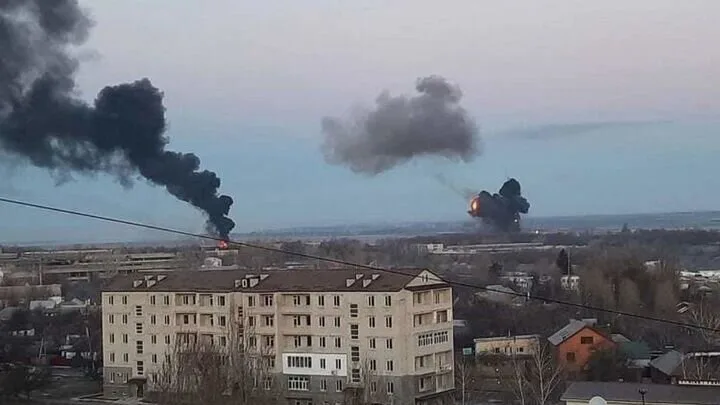
The wars in Iran, Gaza, Ukraine, Sudan, Congo, and Myanmar are among the most important topics expected to be raised in the speeches of world leaders. This raises the question of whether the United Nations and global powers still have the ability to end major conflicts.
Read more: Exit of Italian Fighters from the Taif Base in Saudi Arabia
Global warming and its consequences will also be a significant focus of the General Assembly. Increasing inequality, disruptions in shipping routes, pressure on supply chains, and rising prices are other challenges that world leaders are facing.
The Future of the United Nations and Necessary Reforms
The future of the United Nations itself will also be part of the discussions. After 81 years since the establishment of this organization, the power structure within the United Nations remains largely in the hands of the countries that won World War II. 193 member countries have agreed on a comprehensive reform package that includes a review of key institutions, including the Security Council.
Antonio Guterres' second five-year term as Secretary-General of the United Nations ends on December 31, and his successor has not yet been determined. The selection of the next Secretary-General will also be one of the topics of behind-the-scenes consultations among leaders and diplomats at the General Assembly.
Despite all the crises, the United Nations remains the most important gathering place for its 193 member countries and their leaders. About 130 presidents and prime ministers, along with dozens of ministers and senior officials from international organizations, are expected to participate in this year's meeting.
Donald Trump, the President of the United States, and Emmanuel Macron, the President of France, are among the leaders who will speak on the first day about the state of the world. Volodymyr Zelensky, the President of Ukraine, and Masoud Pezeshkian, the President of Iran, will speak on Wednesday, and Benjamin Netanyahu, the Prime Minister of Israel, will address the General Assembly on Thursday.
Mahmoud Abbas, the President of the Palestinian Authority, will not attend the General Assembly for the second consecutive year due to the lack of a visa from the United States. However, he is scheduled to speak via video conference on the same day.
The list of absentees also includes several leaders of major powers. Xi Jinping, the President of China, will not attend the General Assembly despite his scheduled meeting with Trump in Washington, sending his deputy to New York instead. Vladimir Putin, the President of Russia, and Narendra Modi, the Prime Minister of India, will also not be present at this meeting.
Jérôme Bonnafont, the French ambassador to the United Nations, has stated that in the current circumstances, the support of world leaders for the United Nations is very important. He added that the General Assembly is an opportunity for countries to show that they prefer cooperation and dialogue over confrontation.
Last year was difficult for the United Nations. The organization has played a limited role in ending several major wars, especially in the Middle East and Ukraine, while facing serious financial difficulties. The failure to pay billions of dollars in U.S. debt to the United Nations has complicated the financial situation of the organization and led to a reduction in some peacekeeping operations and humanitarian aid.
Despite these challenges, the United States recently paid $725 million of its share in this year's regular budget for the United Nations. This amount was sufficient to prevent the U.S. from losing its voting rights in the General Assembly and is seen as a sign of the country's continued presence in the United Nations.
Artificial intelligence has also become one of the important topics of this year's General Assembly. The rapid advancement of this technology and the lack of global regulations and frameworks to control it have raised widespread concerns. The United Nations Security Council is also holding a high-level meeting on artificial intelligence this Wednesday afternoon, an action that indicates growing concerns about the implications of this technology at the political and security levels.
This is the last General Assembly of the United Nations that Antonio Guterres will attend as Secretary-General. Last week, he explained the themes of his speech by stating that the world has entered a "period filled with deep uncertainty." Guterres added that as the world faces three major threats, international cooperation is more important than ever.
Read more: Macron and Trump: Cooperation to Reduce Tensions in the Middle East · The President's Presence at the United Nations and Diplomatic Opportunities