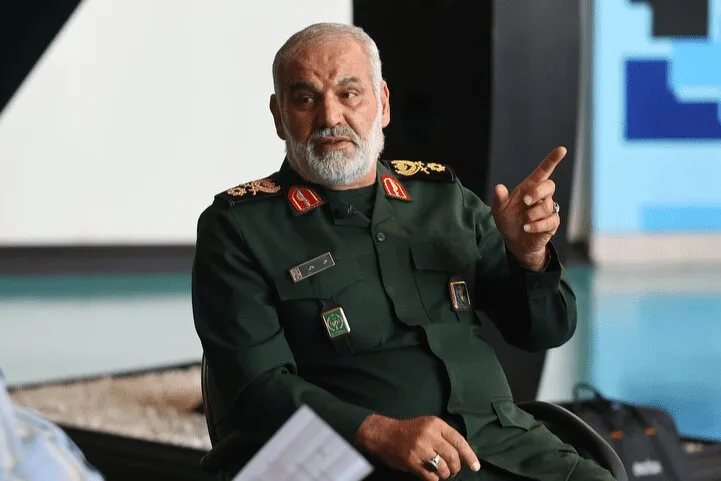
General Bilali, a senior commander of the Islamic Revolutionary Guard Corps, in a candid interview, examined the developments in Iran's missile industry from the time of the imposed war to the present. He recalled the role of Martyr Hassan Tehrani-Moghadam in establishing and localizing the country's missile capabilities and reviewed the challenging path of this industry.
A History of Iran's Missile Industry
General Bilali reminded that at the beginning of the imposed war, Iran faced a shortage of missile equipment and technologies. According to him, in the early years of the war, Iran did not even have surface-to-surface missiles, and to launch the first missiles, a team of seven or eight people would go to Kermanshah in a Toyota station wagon. These initial efforts marked a turning point in the history of Iran's missile industry.
Read more: A new wave of rain will affect 23 provinces and Tehran will be rainy
As the war continued and with international and domestic collaborations, Iran was able to acquire new technologies and significantly increase the number of missiles and launch platforms. General Bilali emphasized that today there is the capability to launch 100 missiles and several drones simultaneously in one operation, which is an example of the remarkable advancements in this industry.
New Strategies and Geographic Expansion
General Bilali referred to strategic plans for expanding missile units across the country and said: "The idea of creating missile cities has been in our minds for a long time. These plans are designed to enhance deterrence and readiness against enemy threats." He emphasized that today Iranian missiles are stationed in various parts of the country and have the capability to conduct missile operations in the farthest points of the country.
He also pointed out the importance of preserving the memory of martyrs and the achievements of the Sacred Defense era, stating: "Today, by utilizing domestic technologies and continuous efforts, we have been able to achieve a significant position in the missile field that even enemies cannot ignore. This path was initiated by Martyr Hassan Tehrani-Moghadam, and we are obliged to continue it."
General Bilali, referring to Iran's current missile capabilities, noted: "Today, due to experience and technological advancements, we can fire as needed and with power in any operation. This is while during the Sacred Defense era, there were many limitations in supplying and firing missiles."
General Bilali concluded by stating that the Islamic Republic of Iran, relying on its internal capabilities and with a spirit of resistance against enemies, will continue to strengthen and develop its missile industry and hopes that one day great powers will benefit from these experiences.
Read more: Iran's protest to Norway regarding the misuse of Starlink and the inaction of this country · Iran and the Gulf countries: Beginning a path for mutual trust