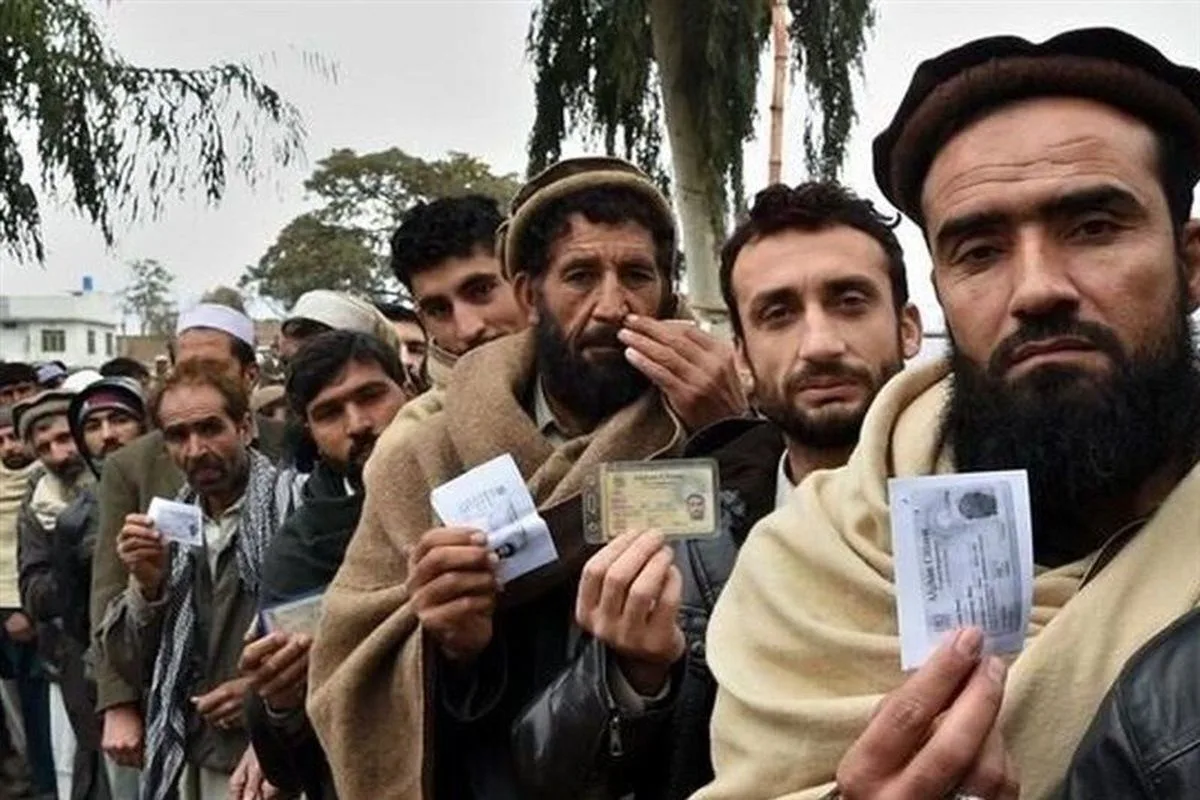
The forced return of Afghans to their country and the challenges of re-migration is a topic that has recently gained significant attention from the media and decision-making bodies. Past experiences indicate that the hasty and unplanned expulsion of nationals to a country already grappling with deep economic crises not only does not end the migration issue but also leads to the reproduction of poverty and the formation of a harmful cycle of 're-migration'.
The Current Situation of Afghan Migrants in Iran
The presence and living conditions of Afghan nationals in Iran is one of the most enduring and complex social and economic phenomena in the contemporary history of the country. Over the years, Iran has consistently been recognized as one of the main destinations for Afghan labor migration and refugees. However, this year, statistics show that the volume of movement, return, and expulsion of Afghan nationals has reached unprecedented levels. According to international reports, from January to September 22 of this year, a total of 522,200 Afghan citizens have returned from Iran to their country.
Read more: Abbas Akhoundi Escaped Death
Of this number, 439,000 individuals, or 84% of all returnees, have been forcibly returned through border expulsion. These statistics indicate that Iran, with an 87% share of all recorded expulsions to Afghanistan, is at the forefront of countries returning Afghan nationals. In this context, the expulsion of approximately 500,000 Afghan migrants this year is equivalent to completely emptying the population of a large city and provincial center like Arak.
Social and Economic Challenges for Returnees
Previously, law enforcement officials reported the exit of 1.8 million Afghans last year, and recent estimates suggest that around one million illegal migrants are still present in various parts of the country. Migration analysts believe that the repetitive cycle of 'illegal entry, arrest, and border expulsion' without creating comprehensive mechanisms for identification and issuance of identity-based documents imposes significant costs on the country and cannot replace a comprehensive migration management model.
This issue is currently accompanied by new challenges. For instance, the number of students in the districts of Tehran Province has increased by 17,000, which is attributed to the return of some Afghan nationals. As a result, the renewed presence of Afghans in Iran is significantly on the rise.
Past experiences show that the hasty expulsion of nationals not only does not solve existing problems but also creates new issues. Millions of Afghans who have returned to their country in recent years are facing a severe housing crisis and a lack of job opportunities. Many of these individuals have lived in Iran for years, and their children have grown up in Iranian territory. Therefore, they do not have a cohesive social and economic network in their place of return, which complicates their social reintegration and perpetuates their economic dislocation.
To organize migration, it is necessary to implement intelligent management and precise identification of nationals. Mastery over borders and directing movements towards legal pathways can help resolve these issues. In this regard, Brigadier General Ali Akbar Javidan, the commander of the border guard of the police, has announced the readiness of border guard forces across the country's borders and emphasized the need for precise control over the entry and exit of nationals.
Read more: Alireza Zakani: Tehran Will Become a Smart City Beyond a Creative City · Peyman Ghasemkhani Talks About His New Life in Spain