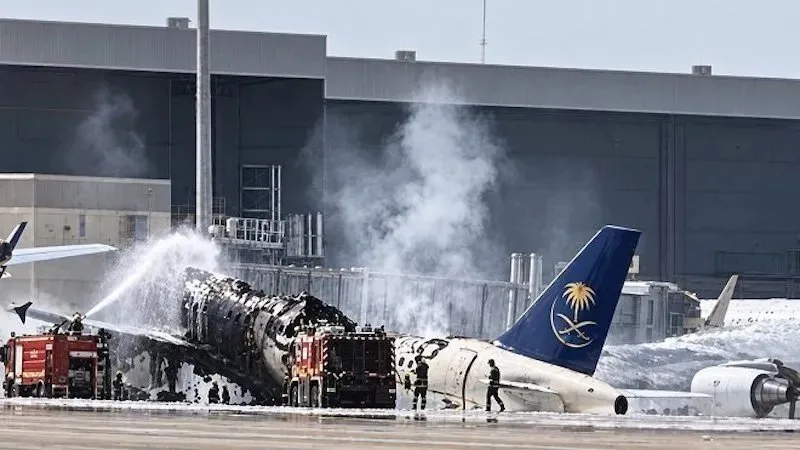
Saudi Arabia, a country recognized as one of the regional powers with advanced air defense, has recently faced a serious challenge against the attacks of Yemen's Ansarullah. The continuous passage of Ansarullah's missiles and drones through the defense systems of this country has raised questions about the effectiveness and defensive capability of Saudi Arabia.
Factors Contributing to the Failure of Defense
Saudi Arabia's air defense has failed to intercept Ansarullah's missiles for various reasons. One of the main reasons is the geographical expanse of the country, which makes it difficult and costly to simultaneously protect cities, airports, and scattered oil facilities. Due to its vast geography and the dispersion of critical facilities, the country faces serious challenges in managing and deploying air defense systems.
Read more: Maximo Torero: Zero Hunger by 2030 is Unattainable
Additionally, the continuous use of Patriot and THAAD missiles in regional conflicts has reduced Saudi Arabia's missile stockpiles and limited its ability to counter new attacks. The ongoing use of this equipment over the years has made Saudi Arabia heavily reliant on existing reserves, preventing it from responding quickly to threats during critical times.
Changes in Ansarullah's Tactics and Technical Limitations
Ansarullah's tactics have also significantly changed. This group has turned to the simultaneous use of drones, cruise missiles, and ballistic missiles. This diversity in attack types has put pressure on Saudi Arabia's defense systems and challenged their functionality. In fact, relying solely on interceptor missiles cannot guarantee the effectiveness of the defense, and other factors such as radar coverage, early detection, command, and control also play a significant role.
Moreover, Ansarullah has leveraged its past experiences from previous attacks and, by improving its routes and tactics, has achieved greater successes. This group has analyzed the weaknesses of Saudi defense and has been able to design its attacks in a way that minimizes the likelihood of interception.
As a result, the failure of Saudi defense in facing the missiles and drones of Yemen's Ansarullah not only indicates technical and operational weaknesses but also highlights the complexities of contemporary warfare and the necessity for updates in defensive strategies. In this situation, Saudi Arabia must seek new solutions and improve its defense systems to effectively respond to future threats.
Read more: Istanbul Underwater; Torrential Rains Halt Life in Istanbul · Turkish Parties Warn: Agreement with Saudi Arabia Should Not Drag the Army into the Yemen War